
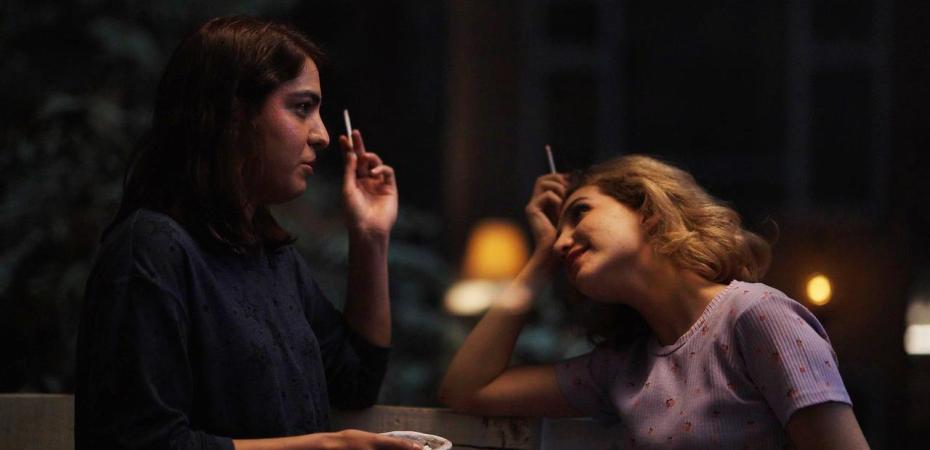
Written and directed by Maryam Ataei and Hossein Keshavarz, a dancer and a playwright juggle the mundanities of living together with the struggles of creative practice as part of Iran’s underground art scene. Starring: Mahshad Bahram, Hana Mana, Farzad Karen, Zohreh Pirnia, Parham Ghanavat, Erfan Tehranifar, Ali yar ahmadi, Farzad Namavari and Zorheh Piran.
One of the most fascinating elements of The Friend’s House Is Here is how Maryam Ataei and Hossein Keshavarz make such a distinct effort to make this a film about oppression, patriarchy, and conflict, while making the focus art, friendship and community. They allow all of those political themes to bubble away in the background, to add tension and a lingering threat, while keeping the friendship between Pari (Mahshad Bahram) and Hana (Hana Mana) forever at the forefront.
It was a clever choice from Ataei and Keshavarz, all of the heavier issues of The Friend’s House Is Here come through naturally, and that allows the audience to see for themselves how the characters are impacted living within this tumultuous, volatile and often punishing environment. Something which is then interestingly balanced by the personality to Ataei and Keshavarz’s direction, which has a lot of fluid movement and strays away from strictly traditional shot choices. They bleed the artistry of the characters into the visual style and add a feel of hope for creativity and freedom in a time and place which often values neither.
Undoubtedly, another big dose of personality comes from the performances from Mahshad Bahram and Hana Mana. The friendship which they craft between Pari and Hana is sweet, strong and not always smooth, which makes it much more authentic. Bahram brings a lot of passion but also logical, sensible qualities to Pari while Mana’s Hana has a sprite type energy, she’s bubbly and constantly on the move as very much befits her dance background. Together they’re charming, relatable and thoughtful.
The Friend’s House Is Here creates a great exploration of the oppression of women and the arts, without needing to let that persecution become the focus. Maryam Ataei and Hossein Keshavarz commit the film to being about who these women are as people, not the threats that they face, while still capturing the danger and trauma. It’s very well done, it may stretch out its final act a little more than it needed to but otherwise the pacing and progression are good work. Mahshad Bahram and Hana Mana create a friendship which has a wonderful depth and is easy to watch, while being quietly devastating as their story captures how everything comes full circle, art imitates life and ultimately, their life imitates that art.

