
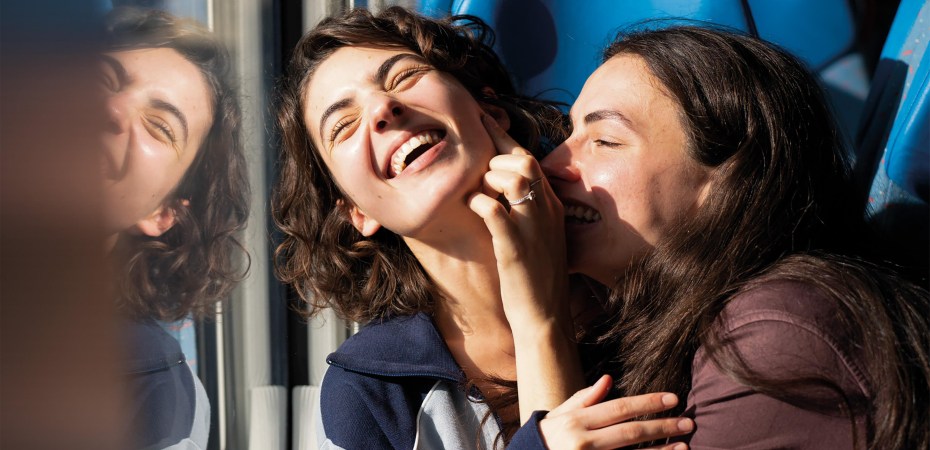
Written and directed by Irene Dionisio, co-written by Marco Borromei, two childhood friends now in their thirties, reunite after years apart to fulfil a dream they once shared: reaching the summit of Mount Etna. But something feels off, and a bitter confrontation breaks out, opening old wounds and unveiling deeply buried secrets. They separate just as the volcano begins to tremble. Starring: Tecla Insolia, Romana Maggiora Vergano, Giuseppe De Domenico and Mati Galey.
The idea of thematically bringing together natural phenomena with emotional conflict and journeys could basically be its own sub-genre of cinema at this point. Especially when it comes to volcanoes as that volatility and destructive force can be so well linked to distress and trauma, or also toxic, narcissistic and combustible personalities, Idda is mostly the former, with a little bit of the latter. However, Irene Dionisio and Marco Borromei rely a little too strongly on the metaphorical and atmospheric qualities that Mount Etna provides.
So much time is spent cutting to blocky, low quality footage of the volcano, that it adds a slow, clunky quality to Idda. Something that becomes more problematic when outside of that the film also has a very slow-burn, pensive style. Although some of it does work well, the lingering presence of long-held secrets and unprocessed emotions, adds some great tension. However, the potential emotional power which those elements hold never come to fruition.
Ultimately, Idda is much more youthful than expected, it can’t quite come to grips with the depth of story that it wants to tell. Something that deteriorates further in the later scenes, with the filmmakers making a lot of choices which are frustrating and feel driven by hormones more than anything else, which don’t have a great deal to offer. Although the performances from Tecla Insolia and Romana Maggiora Vergano are solid work, they provide arguably the most consistent element that the film has to offer.
Idda offers an interesting concept, and there are some intriguing layers to its story to unravel, but we never truly get to see that. The beginnings of everything are there, but the resolution is frustrating. The style is of mixed success, in its quieter moments, the cinematography (from Gergely Pohárnok) has plenty to say, but there are also moments in which the direction reminds of a music video. The quality is even more mixed when employing a lot of aesthetically unsatisfying views of Mount Etna. It can also become rather sentimental towards the end, and takes an unnecessary sexually driven tangent, rather than digging into the emotions of the story.

