
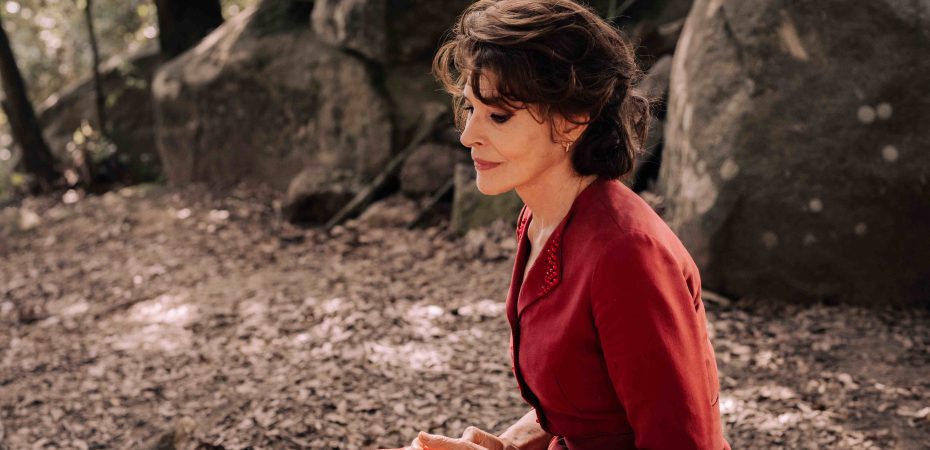
Written and directed by Nora Jänicke, Joanna, trapped on an isolated island with her elderly disabled husband, Joanna develops a complex and dangerous dynamic with Ada, his caretaker, leading to a psychological power struggle. Starring: Joanna Kulig, Fanny Ardant and Marco Rossetti.
The visual, the aesthetic and the tone which Nora Jänicke and cinematographer Valentina Caniglia create quickly have an old-fashioned sensibility, throwing back strongly to cinema of the 1970s. There’s a reserved quality to them, a rustic charm to the colours and a genuine attempt to build an elegance to the flow and movement of the direction. All of those choices work but looking at the bigger picture and how Isola ultimately plays out, it is perhaps slightly too softened to allow the plot to deliver a bigger impact.
Jänicke’s writing brings through a lot of pointed dialogue, it’s interesting to watch how every conversation between Joanna (Joanna Kulig) and Ada (Fanny Ardant) continuously shifts the power dynamics of their relationship. That’s really the heart of Isola, the constant change of what they are to one another, what cards they hold, and how can they use that to get what they want. It’s delivered quietly, and within the background sits a subtly enigmatic quality holding onto the secrets of the story.
There’s a quality to the way that Fanny Ardant delivers this performance which almost veers into Mommie Dearest territory, the body language and cadence hold a very ‘mother knows best’ essence. However, she certainly keeps you guessing as to what her real intentions or desires are, you’re constantly questioning: does she want to save her, be her or be with her? Whereas Joanna Kulig’s intentions with Joanna feel more straightforward, her manipulative qualities feel nicely familiar, how she understands her power and attempts to use it to her full advantage. Together the two of them create a strange bond which is never at ease, and it’s an interesting exploration of the themes of control and dependency.
Isola is a slow-burn, low-key dramatic thriller, crafting a chess game between two women and leaving the audience waiting to see who’ll make the final move. It’s a refined exploration of power dynamics and control, with elegant performances from Joanna Kulig and Fanny Ardant, but it lacks bite. It takes that reserved quality a little too far, which then limits it from being able to build a sharpness, a sinister edge or a slickness to its duplicity, to really be able to pack a punch. It’s overly even, missing those ups and downs, or an evolving energy or intensity, but regardless, it’s a solid effort for a debut feature from Nora Jänicke.

