
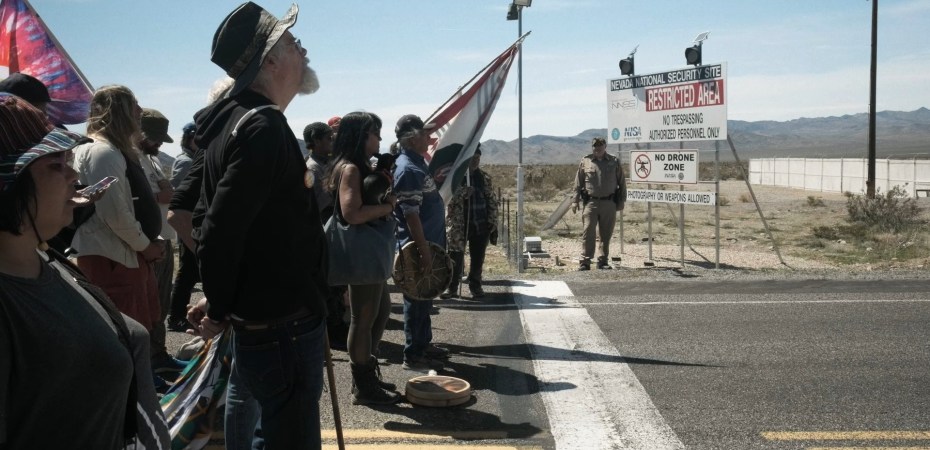
Directed by Casey Carter, six rural American communities are marked as candidates for an unthinkable fate: their land, a burial ground for 77,000 tons of nuclear waste. Against the impassive logic of government analysis and archives, a people’s history of resistance and stewardship emerges through a visceral journey across the landscapes, ecologies, and personal histories of the candidate sites.
Given that it has had an almost immeasurable impact, and perhaps we’ll never truly know the far reaches of its consequences, it’s no surprise that documentaries continue to explore the past and present of nuclear technology, and its incredibly hazardous waste. However, Casey Carter definitely does things a little different with To Use a Mountain. Primarily by how this film has such a keen focus on design, it’s meticulous, purposeful and finds itself in the strange place of being both clinical and personal, which is not easy ground to find.
That design influence, and the use of visual representations to explore the historical data and documents creates a surprisingly strong presence. There’s a definitive, authoritative poise to it which nicely captures the heaviness of the topic. An aspect which Carter does incredibly well, especially by employing that clean, concise style, is capturing the casual haunting quality to these governmental bodies. How callously they view the general public and how quick they can be to dismiss the value of communities, or in some cases, dismiss the rights of those communities altogether, with catastrophic consequences.
Carter then pairs that casually chilling quality with a more intimate touch, dipping into the different communities and allowing members of each to provide their perspective. Each subject portrays the collective outrage and uproar with eloquence and peaceful tactics. There’s a great variety to the subjects which shows how far and wide the potential consequences can spread, and how the choices of governments from many decades past continue to reverberate. All of which is then brought together even more strongly with a wonderful score from Kara-Lis Coverdale.
To Use a Mountain delves into a familiar area of history in an unfamiliar way. The style is composed and calculated to deftly portray the haunting nature of the topic. It won’t work for everyone, while it is easy to respect the artistic choices, they might also prevent viewers from connecting with the topic more strongly. The commitment to that style is excellent but it might not make it the easiest for people to digest the information they’re being given. It has an experimental edge which is captivating, a strong presence and regardless of whether you truly connect with it, it would be hard to deny its poignant tone.

