
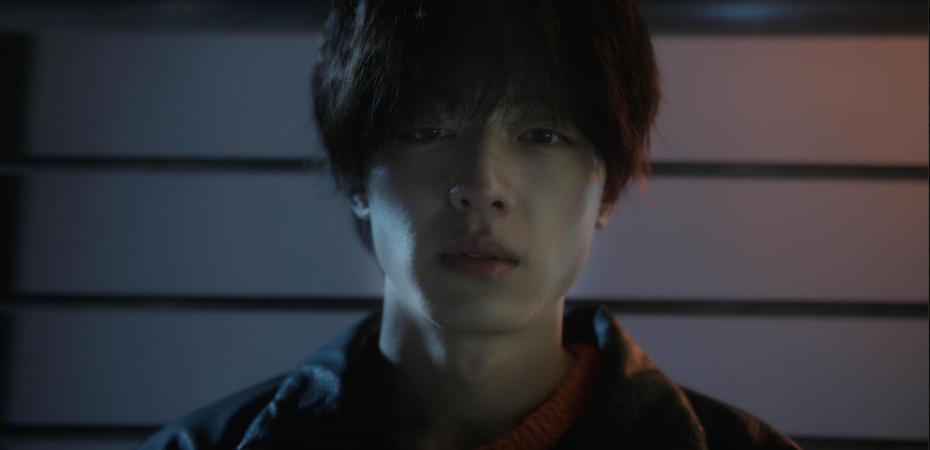
Written and directed by Yuto Shimizu, a young man named Amenashi is haunted by the death of his younger sister Anna, who took her own life after witnessing a classmate’s suicide in high school. Burdened by guilt, he continues to chase her memory. One night, he learns of a secret mass suicide event held in a Tokyo nightclub and is drawn to it. His close friends, Nozu and Hattori, grow suspicious and follow him inside. Starring: Iori Abe, Utano Aoi, Taiga Hironaka and Kosuke Tanaka.
Yuto Shimizu kicks things off with a style that both very modern and also pulling straight from classic home-videos, it’s an interesting choice to attempt to encapsulate the disillusionment of today’s youth. Shimizu builds an atmosphere filled with melancholy, it’s very reflective and has a bit note of nostalgia. It’s shot well, but ultimately its choices can feel somewhat cold and as if it’s undecided on what it actually wanted to be.
The main issue is that a good amount of the film is a simpler drama exploring lost youth and mental health struggles, but what comes later is rather dark. Tokyo Nightfall doesn’t quite ever get to grips with that darkness, it’s trying to create this blend that’s almost depression meets The Purge, but it doesn’t have the flexibility to embrace the violent and deeply twisted nature of how the story develops. It’s a shame as there was something interesting there, it’s a very unusual concept and while, it might not have the emotional depth it’s looking for, it is creative.
There’s a strong intimacy to Tokyo Nightfall being so focused on these core friends. Iori Abe, Utano Aoi, Taiga Hironaka and Kosuke Tanaka make for a very charming quartet. Hironaka is a particular highlight for the sheer empathy that he brings to this character. His protectiveness of his friend, and his emotional awareness makes for a compelling character. While Abe gives us a familiar representation of depression, guilt and regret. Whereas Tanaka provides a lighter side, the friend who never really takes anything seriously. Then Aoi shows us the root of all their struggle, portraying how trauma fatally changed her. They each have something different to bring to the table, and make for a sweet group of misfits who are enjoyable to watch.
Tokyo Nightfall has an unusual, original concept but it didn’t quite figure out how to execute all of its ideas. It’s intensely young and while that is fitting for its characters, it would have been great to see it expand beyond that to really hit the emotional depth its going for. It’s a strange way to explore mental health but it’s creative, and it goes into some surprisingly dark places. It’s just a shame it doesn’t quite appreciate how dark it is, so those moments don’t hit as viscerally as they could have. There’s potential in Tokyo Nightfall, but it doesn’t all come together as strongly as it had the potential for.

