
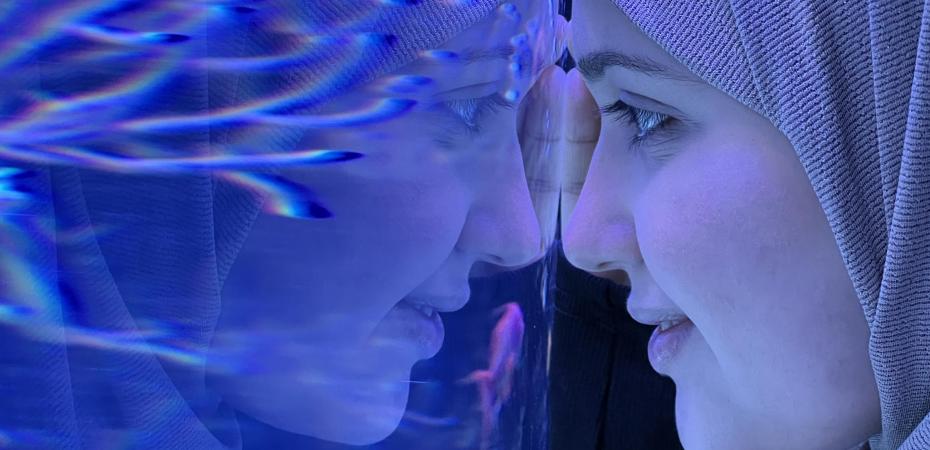
Directed by Itab Azzam and Jack Macinnes, a Syrian girl’s decade-long journey to Germany and back, as she and her family face the challenges of war and life as refugees, showing both the hardships and hopes of starting anew.
Itab Azzam and Jack Macinnes have crafted a unique experience to be able to witness Israa and her family’s journey from the very beginning, fleeing the war to discovering a new life in Germany. One in a Million starts off on a charming note as it introduces Israa and her bubbly personality, then quickly switches to one that is quietly chilling. To watch as she walks the streets, passing vendors selling all of the supplies potentially needed to make the crossing: floatation devices, power banks, phone protectors. It so casually captures the desperation of the citizens and the lack of viable options for their safety, forced to risk their lives in order to preserve them.
However, while many could have then spent time delving into the war and its roots, or the immigration process itself, instead One in a Million focuses on the family. That’s really its biggest strength because it becomes a diary of their psychological journey, leaving their home and starting a new life in a place that little resembles their home country. That comes with a lot of challenges but also freedoms, and both can clearly be a difficult transition.
It’s not an easy watch to see Israa’s father as he tries to retain the traditional Syrian values, while the rest of the family want to enjoy their newfound freedoms and sense of identity. Azzam and Macinnes capture the very different experiences with those willing to embrace change and those who can’t. They also do a wonderful job of portraying the resilience of the children, to go through such a harrowing experience, as well as facing prejudice when they finally arrive in Germany, but to still be excited about the prospect of their new lives is something special to watch.
One in a Million creates a fascinating experience of watching Israa become an adult while going through so much turmoil and change. Watching how her perspective shifts, as well as how she looks upon her home country, her relationship with her mother and embracing the freedoms for young women in Germany that would be impossible for her in Syria, is undeniably compelling.

