
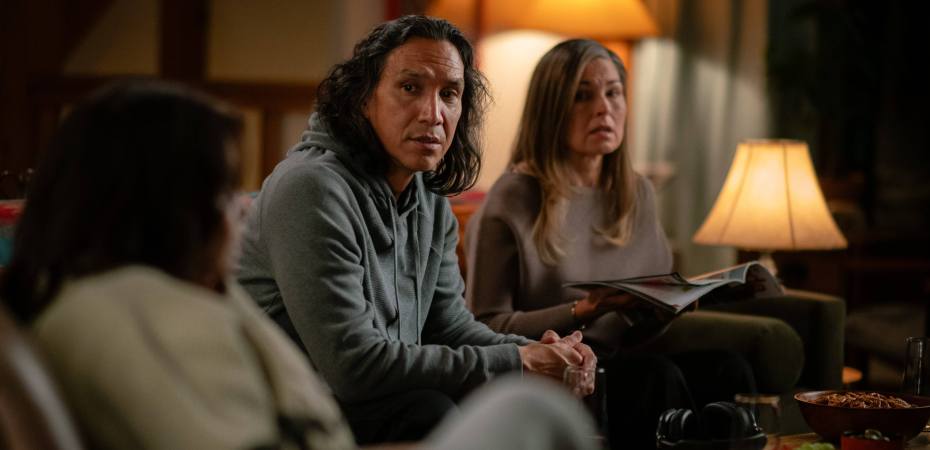
Written and directed by Tasha Hubbard, and co-written by Emil Sher, four Cree siblings, separated as babies through Canada’s notorious ‘Sixties Scoop’, which saw indigenous children taken from their homes to be adopted by white families, agree to meet for the first time over a holiday weekend in the mountains of Banff. Starring: Michael Greyeyes, Carmen Moore, Alex Rice, Michelle Thrush, Theda Newbreast and Russell Badger.
It’s not often you see a director take a story they’ve already captured in a documentary and translate it into a drama, but that’s what Tasha Hubbard did. Hubbard’s 2017 Birth of a Family became Meadowlarks, and you can easily see what drew her to revisit this story. It’s such a harrowing tale but it’s also filled with compassion, healing and family. With so many people forever trying to downplay or erase the atrocities which have been committed against indigenous communities, it’s never a bad time to explore them.
However, Hubbard and Emil Sher don’t use Meadowlarks to dig into the scandal and get into the nitty gritty of the Sixties Scoop, they focus on the siblings. They explore how that trauma lingers, how it has impacted their lives and relationships. The majority of the film isn’t spent outwardly expressing their traumatic experiences but instead portraying their quiet reflection and the struggle of the siblings to reconnect after so many years. It nicely captures their tentativeness and awkwardness, they don’t try to force the drama and conflict.
Michael Greyeyes, Carmen Moore, Alex Rice and Michelle Thrush each do a great job of portraying the brokenness to their characters. The emotional issues they still have to work through that forever linger just beneath the surface, and how they’re triggered by this reunion. Hubbard definitely makes this an ensemble film but also makes sure to give each actor their moment to shine.
Particularly Michael Greyeyes who gives a wonderfully vulnerable, moving speech. Alex Rice brings such a touching generosity and empathy to Marianne. Michelle Thrush adds a touch of aggression and sarcasm, highlighting the constant pushback to opening the floodgates of their trauma. While Carmen Moore gives Connie almost a naivety, she gives that feeling of forever attempting to make things neat and tidy, when that’s simply not possible.
The four of them make a really enjoyable quartet and for the most part, Meadowlarks focuses entirely on them but there are brief moments where the supporting actors get a little of the spotlight, and it’s Theda Newbreast who really makes the most of it. Newbreast is wonderful, even in her brief screentime she fills the film with the spirit of community and compassion. When she and Russell Badger join the quartet, it makes for possibly the most memorable scene of the film. It’s genuinely moving and thoughtful, capturing the idea of finding the courage to face your fears and flaws.
Meadowlarks takes a harsh, poignant issue and turns it into a touching family drama. It does perhaps take a more sentimental route than expected, it can be a little cheesy and cute at times, but you can respect the choices of Tasha Hubbard and Emil Sher to not cheapen the film by going for shock and scandal. It may not get as far or delve as deeply as you might hope or expect, but they make a real effort to focus on the emotional nature of the siblings’ experience. They employ a simple but effective style, complemented by a subtle score, great performances and it’s an undeniably moving story of resilience and the power of family.
 FilmCarnage.com