
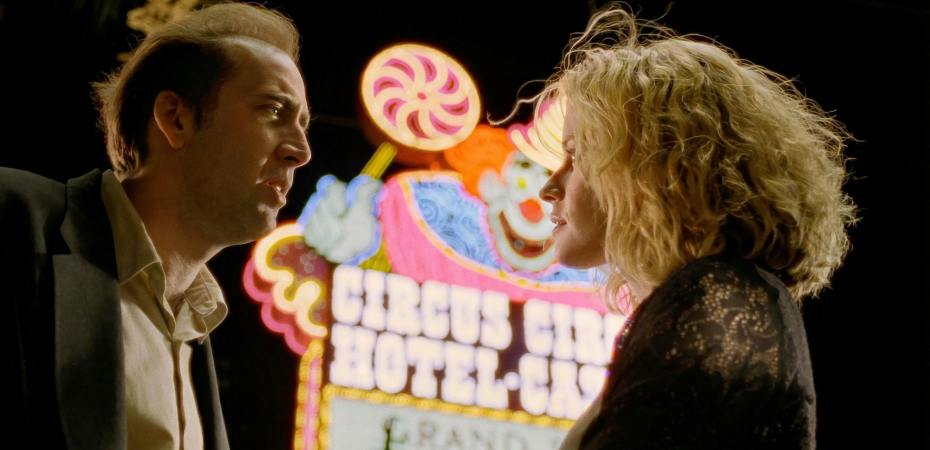
Written and directed by Mike Figgis, based on the novel of the same name by John O’Brien, Ben Sanderson, an alcoholic Hollywood screenwriter who lost everything because of his drinking, arrives in Las Vegas to drink himself to death. There, he meets and forms an uneasy friendship and non-interference pact with prostitute Sera. Starring: Nicolas Cage, Elisabeth Shue and Julian Sands.
To put it very simply, Leaving Las Vegas is not the type of romance that you would recommend to someone who was a romance fanatic, this is not your traditional tale of love, hope and happiness. What Mike Figgis creates is instead an undeniable connection built out of desperation, loneliness and disillusionment. It’s simultaneously intensely depressive and romantic, which is a decidedly strange, unique combination and yet it works very well. With Nicolas Cage’s Ben and Elisabeth Shue’s Sera in this brief moment of life providing what the other person needs. It’s not healthy, it’s not responsible, but it lets them find warmth and feel connected to the world again, even for a few moments.
Matching that morose yet passionate energy, Mike Figgis and cinematographer Declan Quinn tone down the flashing lights and neon of Las Vegas in favour of something mundane and a little bit muted. It feels appropriately drab to the situation that these characters find themselves in, at their lowest and being constantly pummelled by life. However, there’s also a great intensity to match that, with Ben going off the rails and constantly drunk, Figgis’ directorial style understated gives Leaving Las Vegas that same feel of being out of control. You never know where the next punch will land, whether literal or metaphorical but it has some pretty harsh blows to hand out.
You’re already being bombarded with a lot but then there’s the performances, which drive that intensity so much further. Nicolas Cage can historically give filmmakers any kind of unhinged character they could possibly want, up and down that scale of 1-10 and with wildly different personalities. This is a slightly different kind of unhinged, Ben purely does not care what happens to him which creates this soft yet troubled personality, he can be sweet one moment and bleak the next. It’s an interesting blend of Cage’s many layers as a performer.
While Elisabeth Shue brings a heartfelt, shattering loneliness to the table, even just the way she physically portrays this character is filled to the brim with pain and despair. Sera exists on this tipping point, life is pushing her to the brink, but she doesn’t actively want to give up, and Shue captures all of that in a heart-breaking performance. You also have to give it up to the casting team for Leaving Las Vegas for the fantastic list of cameos which includes Laurie Metcalf, Danny Huston, Steven Weber, Ed Lauter, R. Lee Ermey, Lou Rawls, and Mariska Hargitay as a colleague/enemy to Shue’s Sera.
Leaving Las Vegas is a distinctly unique romance, in most respects it’s the antithesis of what you’d expect but then there are such tender moments within its sorrow and self-destruction. The choice from Mike Figgis to feed that bleakness into the aesthetic was a great one, almost in a Mike Leigh fashion. The story captivates you as it stumbles along through its daze of alcohol and melancholy, disarming you before it delivers its biggest blows. It’s intense, moving viewing which creates a very unusual experience. In no small part due to the phenomenal performances from Nicolas Cage and Elisabeth Shue.

