
Directed by Sang-il Lee and written by Satoko Okudera, based on the novel by Shûichi Yoshida, Nagasaki, 1964: Following the death of his yakuza father, 15-year-old Kikuo is taken under the wing of a famous kabuki actor. Alongside Shunsuke, the actor’s only son, he decides to dedicate himself to this traditional form of theatre. Starring: Ryo Yoshizawa, Ryusei Yokohama, Mitsuki Takahata, Shinobu Terajima, Soya Kurokawa, Keitatsu Koshiyama, Min Tanaka, Ken Watanabe and Nana Mori.
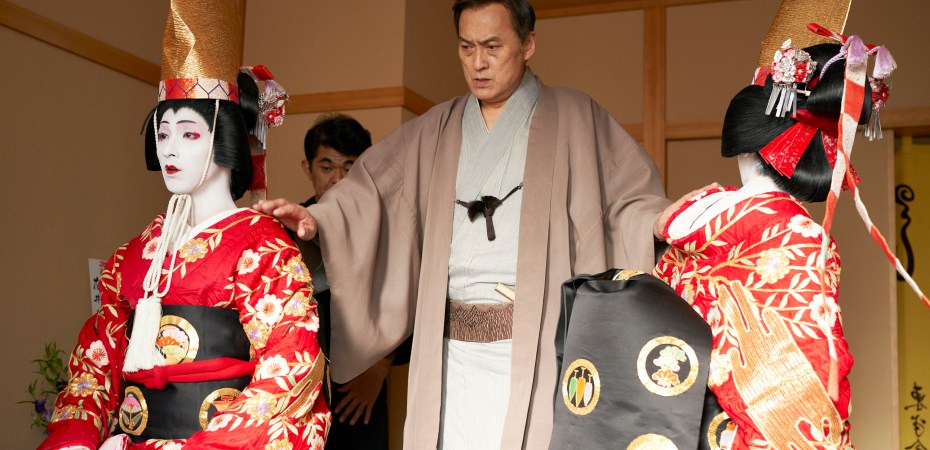
One thing you cannot deny about Kokuho is the artistry, so much of the film is dedicated to portraying the art of kabuki and they spare no expense with the details. The makeup and costumes are absolutely beautiful, their colour is luminous and they hold so much grace and presence. Sang-il Lee encapsulates all of that with the directorial style, it’s expansive, thoughtful, elegant and has a certain composed stillness to it, while still creating a charged atmosphere.
There are some great, tense moments to Kokuho, the sheer dedication and relentless practice come with a genuine intensity, as the characters have such a ferocity for the art, which is very well portrayed by Ryo Yoshizawa and Ryusei Yokohama. However, coming in at almost three hours, it is unfortunately a struggle to maintain that energy. Ultimately, the film feels like it’s more focused on the kabuki performances than the story itself. In-between those performances, Kokuho can move incredibly slowly, and despite covering decades of the characters’ lives, can seem like it’s not getting very far.
That’s likely the key issue which will divide audiences because it is asking for a lot of patience, and if you can give it that and simply appreciate its artistic nature, you will enjoy it but for others, it may be a struggle to get through. Especially as the tone becomes highly sombre in the latter half, there’s a depressive streak running throughout the story which adds an inescapable cloud hanging over the film. The tension starts to fade away, and it ultimately feels like it’s simply saying that art is pain and sacrifice, and balancing that with your private life is almost impossible when you want to be the absolute best, which is not really anything new.
Kokuho is a visual delight, but the story doesn’t always have the weight to back it up. Aesthetically, Sang-il Lee truly embraces the spirit of kabuki and its grace, vivacity and drama but the writing feels relatively simple. The progression is drawn out, so while the performances from Ryo Yoshizawa and Ryusei Yokohama are nicely intense and have a great balance between competition and brotherhood, overall, it can feel lacking. It’s a shame as there’s plenty of great elements, it just doesn’t have enough to sustain the tone and energy, and hold your attention for almost three hours.

