
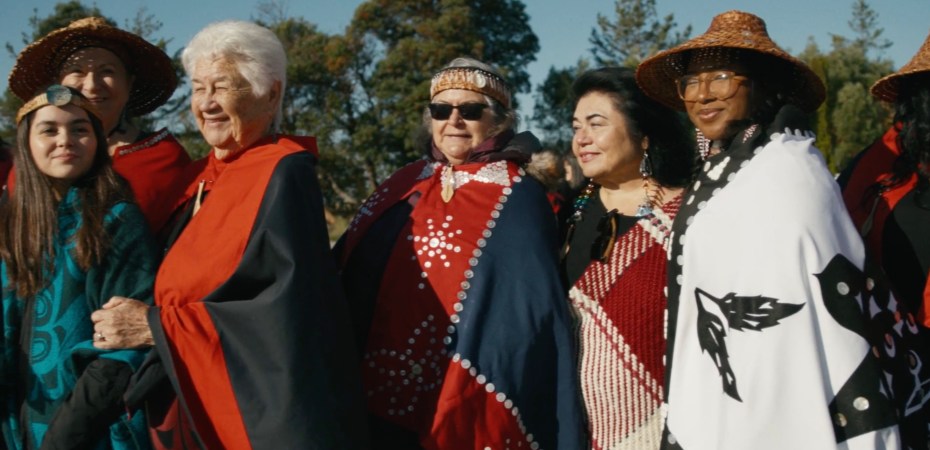
Directed by Eileen Francis and Evan Adams, when the Tla’amin Nation requests a name change for the city of Powell River, B.C.—named for Israel Wood Powell, a key figure in the creation of the Indian residential school system—it ignites a heated debate about whose history is told and respected.
təm kʷaθ nan Namesake may start out as a story of a community wanting to change the name of their city to acknowledge the past and encourage a more accepting, aware environment, but it opens up a much larger conversation. One of disrespect, denialism and misinformation, more often than not stemming from a place of racism. So, on one side of this documentary, Eileen Francis and Evan Adams highlight the ongoing mistreatment of Indigenous communities, but on the other side, it’s a celebration of the Tla’amin Nation, their beautiful land and how they come together to fight, peacefully and respectfully, even if that’s not what they face in return.
Undoubtedly, təm kʷaθ nan Namesake has some stunning views for viewers to enjoy along the way. It’s a bounty of natural splendour, and that simply deepens the emotional vein to the documentary. Something that’s lovingly complemented by the translations of the Indigenous language. It was a thoughtful touch from Francis and Adams, and it matches the nature of the film as a whole, creating a considerate, compassionate tone.
It’s extremely necessary to continue to have conversations like the ones that təm kʷaθ nan Namesake is encouraging, to recognise the atrocities committed against Indigenous peoples, and how we can move forward in a respectful way. Residential schools in particular are a horrific topic and awareness has only begun to rise in recent years, despite having been established over a hundred years ago. So, to see the residents of Powell River, casually deny and downplay the heinous nature of these institutions is, not entirely shocking in the society we live in, but highly insulting, and poignantly lacks any empathy.
With təm kʷaθ nan Namesake, Eileen Francis and Evan Adams created a great balance of celebrating the power of the community, as well as its natural beauty, while exploring the treatment of Indigenous peoples, and how much progress is still to be made. It’s interesting to see it delve into such issues of racism and denialism, while fostering a heartfelt atmosphere. It cleverly uses this one topic of the name change to highlight so many more important, vital topics and does so in a very accessible, captivating, touching way.

