
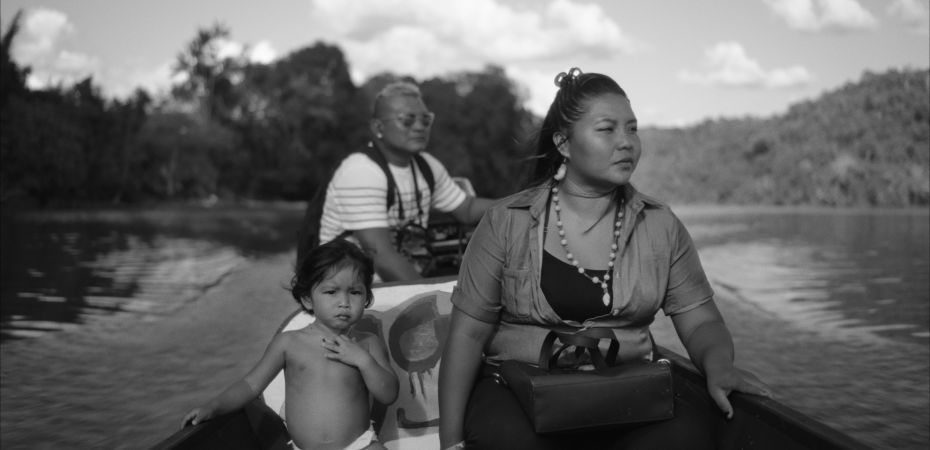
Directed by Zaïde Bil and Sébastien Segers, on the border of Surinam and French Guyana, indigenous Wayana territory is overrun by intruders. Illegal gold miners poison the river, missionaries repress indigenous identity, and even doctors with the best intentions leave marks that are often silently violent. The Wayana call these intruders Parasisi.
When it comes to choosing a black and white aesthetic, it’s a delicate balance because chosen poorly, it can feel performative and egotistical but done well, it can elevate and echo all the emotional and political layers to the film, Parasisi chose well. Even purely in the opening scene you can feel the depth and presence that this visual has to offer. The cinematography from Angela Otten is exceptional, it’s enveloping and rich, and incredibly satisfying to watch. That first impression from that stunning visual sets the tone perfectly for the whole documentary.
It matches the considerate, reflective, compassionate nature which Zaïde Bil and Sébastien Segers instil in Parasisi. Especially in how it allows things to move in a completely natural manner, it’s not attempting to over-edit or construct scenes, the filmmakers allow them to speak for themselves which was a fantastic choice. Mostly because the documentary does have a great deal to say and having the experience itself communicate that instead of narration or talking heads makes for more satisfying, meaningful viewing.
Especially as it’s such a poignant topic, one that despite its history going back decade upon decade, is still one that needs to be further explored. We often see territories and lands which have been taken from indigenous communities and their fight to restore them, but we don’t often see the impact of those who retain their land but have their way of life upturned by the involvement of outside parties. Parasisi is a great insight into that experience because you can see the ripples of that interference in every aspect of their way of life, both in the everyday and in the long term.
The doctors are a particularly good example, it’s great to see that the community is receiving healthcare, especially pregnant women and new mothers, but they never attempt to speak their language or empathise with them. They expect the Wayana to do things their way, and show quite little patience, and that’s because ultimately they are only there to serve their need to discover the lengths of their damaging impact. We constantly see all throughout Parasisi how the community has been shaped in a way they never asked for, was never for their benefit and is continually damaging their health and way of life.
Parasisi is beautifully shot with incredible depth, the atmosphere is compellingly charged, and the documentary moves in such a pointed yet composed way. There’s a sincere grace to the way Zaïde Bil and Sébastien Segers the Wayana’s story which allows them to capture the harshness and cruelty in a quiet, affecting manner. There could perhaps be a little more connective tissue to weave the different subjects together more strongly, but it doesn’t affect the film overall. The way that they’re able to communicate all the issues without having to address them directly, other than providing a few eye-opening statistics, is excellent. Choosing to let the community’s experience speak for itself and not inject unnecessary elements was undoubtedly the right choice, and makes for moving viewing.

