
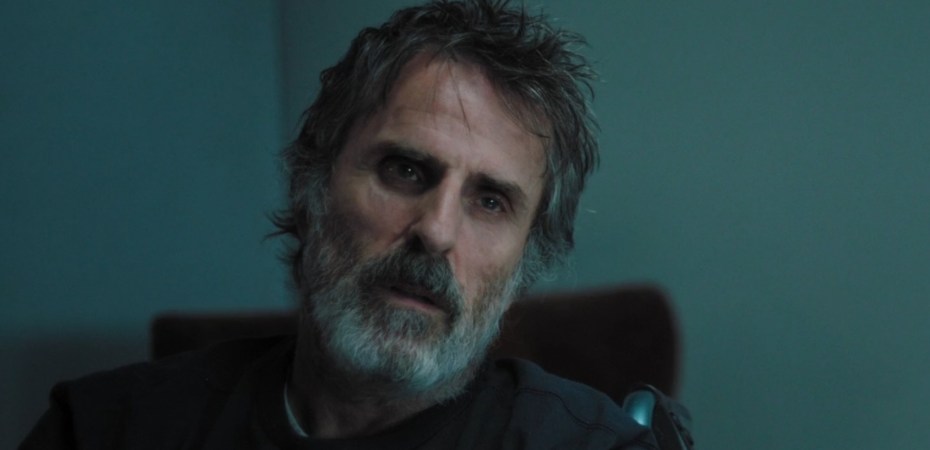
Directed by Ian Puleston-Davies and written by Paul Ludden, William (Billy) Livesey is a Falklands Veteran with dementia, living in a care home. Memories from the past help guide Billy through the fog of dementia and re-connect him to the present. Starring: Con O’Neill, Becky Bowe, Lisa Whiteside, Trevor Dwyer-Lynch and George Osborne.
It bears repeating many, many times that one thing we need more of, and to teach people to have more of, is empathy and Being Billy serves as a reminder of how valuable that empathy is. As well as how important it is to treat people with respect, because it’s incredibly easy to lose hope in humanity and the desire to keep going, or to try to connect, without those two things. Part of how Ian Puleston-Davies and Paul Ludden pull off that message is to keep things relatively simple.
While other filmmakers might have been tempted to employ unnecessary flashbacks and to try and instil the adrenaline or action of wartime, or over-emphasise PTSD, with Being Billy the filmmakers instead keep the focus on Billy (Con O’Neill). Capturing his trauma and mental state by revisiting his connections with his friends and fellow soldiers. There’s a nice change in the cinematography (from Jenni Suitiala) to separate the present and his memories. Reflecting the coldness we can often find in reality, versus the warmth of memories, and trying to find a middle ground.
Then having that scaled back setting allows Con O’Neill to bring the depth and intensity that Being Billy needs with his performance. He creates an excellent balance and injects a lot of tension. There’s a huge range of emotion to his performance, and he does really well to make his presence felt, even in his stillest, quietest moments. It’s a moving portrayal, and he’s well supported by the rest of the ensemble, who add a lot of personality into the mix, a little bit of humour and a growing warmth.
Being Billy makes the clever choice to keep things simple to explore something complex. Allowing the emotions to take the lead, not feeling forced to explore everything visually, and letting the story speak for itself. It’s led by a strong performance from Con O’Neill, the directorial style takes that theme of empathy to heart, and the writing does well to deal with such complicated issues in such a short time. It’s a nice reminder of why it’s so important to treat people with respect and empathy, not knowing what they’ve been through, and are likely still going through. It’s touching and sensitive.

