
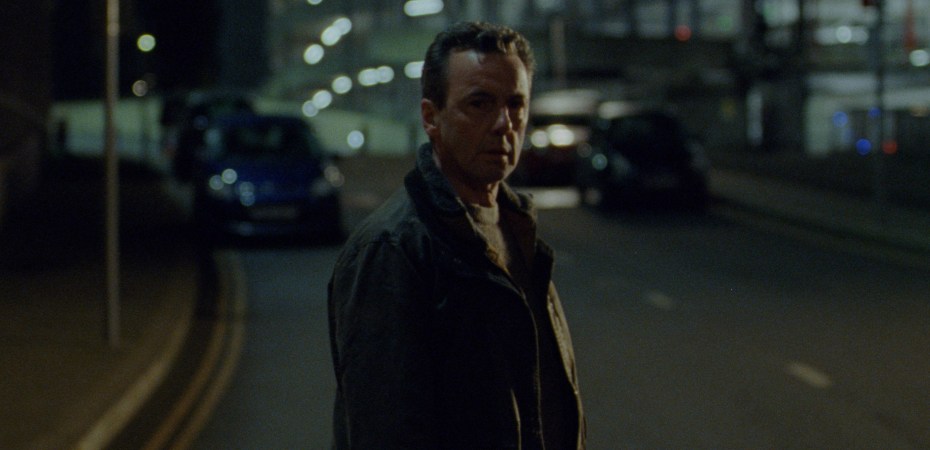
Written and directed by James Arden, Harry, a third-generation cab driver in London, struggles to find his place and purpose in a fast-changing world. Starring: Jay Simpson, Gemma Dyllen, Anna-Maria Everett and Frankie Wilson.
The conversation surrounding jobs being replaced by technology is one that has been raging on for decades and only becomes more relevant as companies invent new ways to replace humans, one of the latest being driverless cars, which is exactly what Black Cab explores. Delving into the idea of London’s iconic black cabs being phased out by self-driving taxis, and what that could mean for the cab drivers who would lose their livelihoods, possibly the only job they’ve ever known, and in turn part of their identity. As well as opening up the conversation about how often people will choose convenience or efficiency over human interaction, and whether technology is considered more reliable than people.
One of the biggest elements of James Arden’s writing, which is so terrifically portrayed by Jay Simpson’s performance, is pride. It’s not just the dwindling money but it’s what that means for Harry as a man, and provider for his family, and how that creates a spiralling desperation, which only ends up further straining his relationship with his wife and child. All of that conflict then fills the atmosphere with anxiety, stress, and a lot of tension.
Those elements are something that Arden leans into with his direction, bringing through plenty of movement to almost give it a thriller edge, especially with most of Black Cab being set at night. Arden lets the camera be influenced by the desperation, panic and tension, and never lets it remain too still, only using that stillness when it has the power to accent scenes and reflect the emotional plateaus. Arden also creates a strong sadness to the atmosphere which hits particularly well in the ending, almost distracting you with its intensity earlier on, while it builds in the background to deliver the right note in the finale.
The mix of past and present versus future is also something represented in the cinematography from Adam Barnett. It holds a really interesting grain to it, leaning more to an emotional, slightly gritty, palette when it’s focused on Harry, then switching to something cleaner when it moves to the driverless vehicles. It creates a good balance and helps to heighten the tension and emotions of the short, something that’s also enhanced further by the score.
Of course, most of the emotion lands on the shoulders of Simpson to build the heart of Black Cab with Harry and he does a great job. You can always see the wheels spinning in his head, the scrambling to find work, the constant consideration of his bleak future, the attempt to do what he thinks is best, while falling prey to his pride and indignance. He brings through a good level of discomfort both as a character and for the audience, something that’s complemented by the performance from Gemma Dyllen, as Harry’s wife Emma. She does a lovely job of capturing the desire to support him in his fight but also the exasperation of his unwillingness to adapt, and the added stress that puts on them as a family.
Black Cab is relevant, tense, sad and slightly anxiety-inducing viewing. Jay Simpson leads the way with a strongly desperate performance which nicely portrays the growing cracks in the world of his character. James Arden crafts a naturally growing intensity to put the viewers on edge as you ponder how far Harry will be pushed. It’s an effective reminder of what countless people go through as they watch their jobs be replaced by technology, while having so many people insensitively tell them to simply accept the inevitability.

