
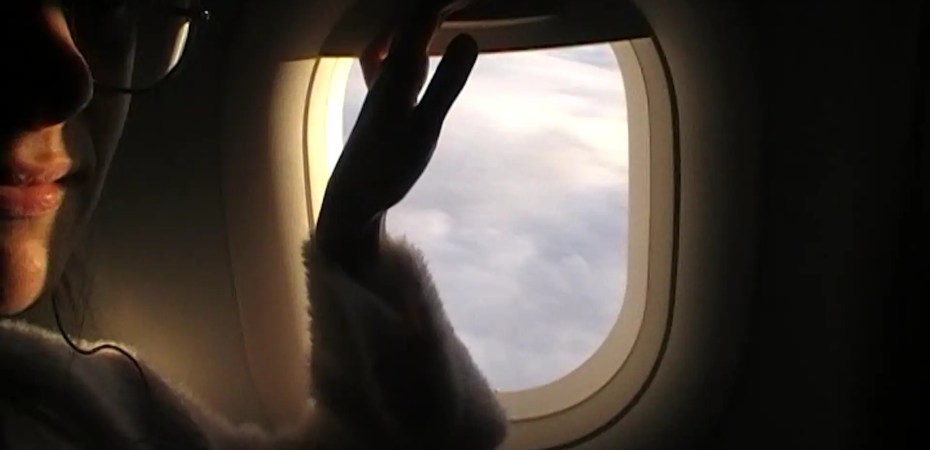
Directed by Orla Smith, in an effort to continue using filmmaking as exposure therapy (after conquering her fear of the Tube in Tube Film), filmmaker Orla Smith tackles an even bigger fear: planes. On a trip to Porto, the camera is wielded as a shield against panic attacks. But this time, things don’t go exactly to plan.
Using film as a therapeutic or cathartic exercise for a filmmaker is definitely nothing new, but it is most often something done in a roundabout way, or hidden between layers of story, Plane Film on the other hand is entirely upfront about it. The film is both exposure therapy and an attempt to explore why Orla Smith feels like that’s the only way she can confront issues within her life.
It’s personal and intimate, there is a certain structure to it but for the most part it feels like candid moments which were then stitched together in the edit. There are advantages and disadvantages to those choices, it does have a natural feel, to portray to the audience that Smith is being open and vulnerable in capturing these moments. However, it can also feel scattered, erratic or at times, rambling.
Particularly with its frequent use of superimpositions, text capturing Smith’s inner monologue as she reflects upon the footage, and her feelings and state of mind in those moments. They feel overused, a good portion of the film is reading those text boxes, rather than it coming from Smith in a more direct way which does alter the experience in a disappointing way. Outside of that the style is basic, which does feel purposeful but at the same time, Plane Film could have potentially benefited from a more distinct style and quality to the footage.
It does however ask some interesting questions, especially those surrounding how much of ourselves we should reveal. As well as how much detail is expected in order to explore an issue, or its impact on a person, in a world where so many seem to believe they have a right to know everything about a person, and have a deep penchant for scandal, drama and violence. However, it never gets very far into those conversations.
Plane Film comes across less like a documentary, and more of a video diary captured to allow Orla Smith to unpack her experiences. It also feels a response to her last film, Tube Film, as it spends a lot of time exploring the reactions and experience of making it, so it does put those who haven’t seen it at a disadvantage. It’s very simple, casual and natural in its style, which works but only to a certain point. It’s well intentioned and asks some very relevant questions but doesn’t delve very deeply.

