
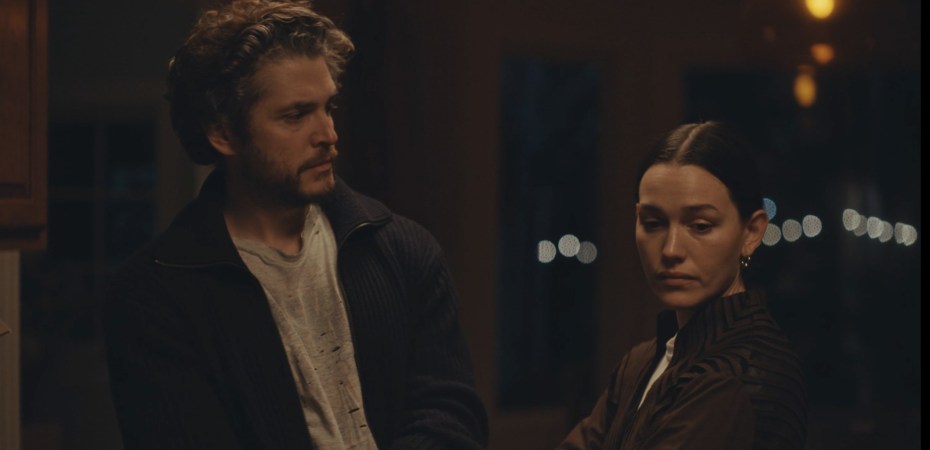
Written and directed by Francesco Aram Zenati, co-written by Fabrizio Muscia, on the night before selling their childhood home, an estranged brother and sister reconnect while cooking their late mother’s favourite recipe. They find their grief simmering just beneath the surface. Starring: Victoria Pedretti and Philip Ettinger.
Right from the very opening, Francesco Aram Zenati hits you with this strong pensive atmosphere, which is elevated by the score from James Pratley Watson. The aesthetic and tonal choices kick Chi Mangia Solo off on a fantastic note, and those strengths are consistent all throughout the short. When we’re then introduced to Victoria Pedretti’s Inva, the film immediately introduces even more layers of sadness, regret and guilt.
That reflective nature of the atmosphere is then balanced really well with the cinematography from Peter Pascucci which holds a lovely nostalgia and warmth. You can unquestionably see the intentions of Chi Mangia Solo through the quality of the aesthetic alone. It brilliantly taps into the idea of family, reconnecting, grief and memories. There’s also a really great use of movement to the direction. All of those elements creating a moving foundation for the performances from Victoria Pedretti and Philip Ettinger to truly bring the story to life, and they don’t disappoint.
The strength of their performances is especially demonstrated by how effortlessly they create that fractured sibling relationship. The tension between them is immediate and you can quickly feel the echoes of their childhood dynamic. They both do a great job of demonstrating different faces of grief, both representing a different version of denial. Pedretti brings a matter of fact-ness to her character, how she uses the task at hand to avoid dealing with the complicated emotions, yet is struggling internally. While Ettinger’s Umberto is the other side of that coin, his heart is on his sleeve, it’s broken and he’s not ready to move on.
They make a fantastic pair, and their performances are strengthened even further when food comes into the conversation. With Chi Mangia Solo the filmmakers capture that restorative quality to cooking and enjoying a meal together. As well as how that food can evoke positive memories. It only loses that slightly when it tries to evoke more of existential theme, which moves away from that core strength of being grounded and warm. It also could have spent a little more time on the preparation of the food to really make use of all of those terrific qualities it has to add to the tone and presence of the film.
Chi Mangia Solo is moving, elegant and has a subtle richness which is compelling. It’s very well shot, both Francesco Aram Zenati’s direction and Peter Pascucci’s cinematography are excellent. They build a strong, dense atmosphere filled with tension, emotion and grief. Victoria Pedretti and Philip Ettinger are both fantastic and their performances are effortless yet utterly sincere. It’s warm and sad, and the Italian influence bringing through the importance and impactful quality of sharing a meal is such a great addition to round out the film perfectly.

