
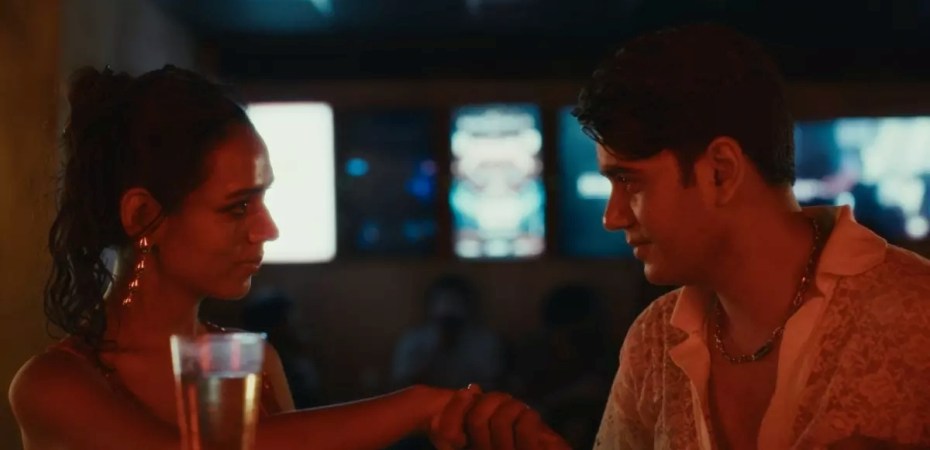
Directed by Ashutosh S. Shankar, a Dalit trans woman navigates love and identity after falling for an upper-caste man, forcing her to confront the silence around her caste. Tara is the story of a 26-year-old Dalit trans woman who meets a singer named Aman at a queer party, sparking an immediate connection. Starring: Siya Malasi, Sankalp Joshi and Sumali Khaniwale.
An element which stands out as soon as you enter the world of Tara is the use of colour. At first, it has an interesting warmth then it moves to a more provocative tone to reflect the nightlife setting, before eventually settling io to the everyday. Those choices create a great introduction from Ashutosh S. Shankar and cinematographer Koustabh Mukherjee, to nicely reflect Tara’s (Siya Malasi) big personality and the strongly flirtatious connection between her and Aman (Sankalp Joshi). That great use of colour is something that’s consistent all throughout the short.
The story then moves quite well, bringing through touches of disillusionment, insecurity, vulnerability and of course, classism. Some ways which Tara explores that key issue of a dated social hierarchy are subtler than others. It’s stronger earlier but later on starts to feel slightly performative, particularly employing the use of slow-motion in the ending. It’s a shame as it is a touching story, and the lovely message of focusing on self-love not the validation of others is certainly there.
As is the quality of the performances, Siya Malasi leads the way with confidence. Malasi makes Tara an easily sympathetic and relatable character, she’s charming and capable. While Sankalp Joshi gives Aman that classic suaveness, he’s a little bit slick, quick with a gift or line. They have a strong chemistry, the intimate scenes may not be as strong as their connection, but they are only used briefly. While Sumali Khaniwale helps to bring out the emotional side of Tara, adding a softer note and her scenes with Malasi are moving.
Tara has a great concept, it’s shot well and features some strong performances. The cinematography is well done, the progression is captivating but ultimately, it feels like this was perhaps a bit too big of a story to fit satisfyingly into a short film. It softens itself too much in the final moments and falls into sentimental territory, rather than holding onto the somewhat stark reality of Tara’s experience. You can see the meaningful intention is there to make it more about self-respect, but the sincerity dips and leaves things on a somewhat stereotypical note.

