
Directed by Andrew Nolan and written by Mark Hennigan, when Peter and Jill engage in an online flame war, they learn just how wrong “making it personal” can go. Starring: Simon Ashe-Browne and Stevie Martin.
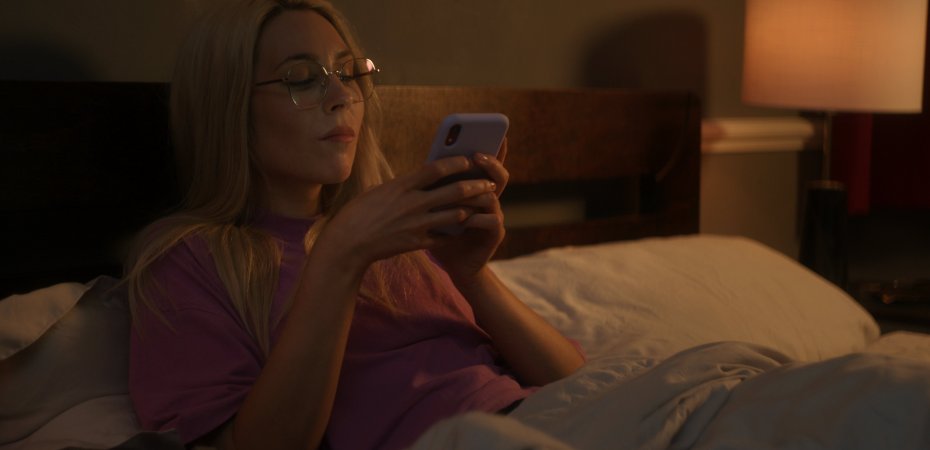
The cinematography from Patrick Jordan stands out as soon as you enter This Conversation Has Been Removed. Especially the colouring, and how the filmmakers use different hues to match the different scenes. With that opening bathroom scene taking on such a great greenish blue with Peter (Simon Ashe-Browne) which is then really nicely contrasted with this rich orange-brown mix for the bedroom with Jill (Stevie Martin) which has a really great warmth. Having that consideration for creating such a strong palette makes for an excellent first impression.
That attention to detail is something that This Conversation Has Been Removed does well on all fronts. In this story of anonymous, online rage, it would have been fairly easy to fall into making it almost parody-esque, highly melodramatic and performative but instead Andrew Nolan and Mark Hennigan create something smooth and funny. It moves with a lot of confidence, and the direction nicely complements the back and forth nature of the writing. The editing (also from Nolan) then enhances that by not relying on simple quick cuts, it has a more organic, weaving feel that works really well.
Choices like that are a big part of why the comedic vein of This Conversation Has Been Removed works so well. Another key element is the timing and progression, again something that has a smooth nature to it, it’s done in a clever way to make for satisfying viewing. It also doesn’t force the topic, considering how relevant it is, as well as how coincidental the story is, it lets things unfold in a nicely natural way.
Hennigan taps into how the classic concept of ‘think before you speak’ has entirely gone out of the window in today’s society when it comes to online presence and social media. It’s instant rage and retaliation, venting your frustrations about the world’s shortcomings in the form of type-screaming at a stranger. As well as encapsulating how deeply forgetful people are of the consequences that come with those harsh words, even when they’re virtual. It’s such a common occurrence but a behaviour which is so very unhealthy, toxic and invasive, with that rage just begetting more rage.
With all that anger, an element which helps to keep a lightness to This Conversation Has Been Removed is the score. It has a jazz feel to it, a choice which makes it feel conversational and playful. Then of course, keeping that balance is also something served very well by the performances from Simon Ashe-Browne and Stevie Martin. With the story meaning that they spend the entire short on their phones, their performances are made up completely of body language and facial expressions, and they do not disappoint. It’s another element where you could go overly simple and make things big and exaggerated, but thankfully Ashe-Browne and Martin keep things smaller.
They both do a wonderful job of capturing how the rage bubbles inside and portraying the triggers and reactionary behaviour. Along with the writing, they clearly show how quickly these interactions spiral and become intensely personal and vicious. Ashe-Browne and Martin capture that sinister satisfaction of an online takedown, only to be enraged again when the reply comes in. It’s always a great exploration of how the behaviours online of your partner might not reflect the person you know, and how those are conversations extremely necessary.
This Conversation Has Been Removed is relevant, clever, funny and smoothly put together. The writing and direction work together perfectly to create a confident, satisfying flow to the story. The cinematography is excellent, the score hits a perfect note to match the comedy, and Simon Ashe-Browne and Stevie Martin really understood the assignment with these performances to make things clear and comedic, but not overt or silly. In today’s world there’s never really a bad time for a reminder that your actions, and specifically words, have consequences and Andrew Nolan and Mark Hennigan provide that lesson in a fun, entertaining way.

