
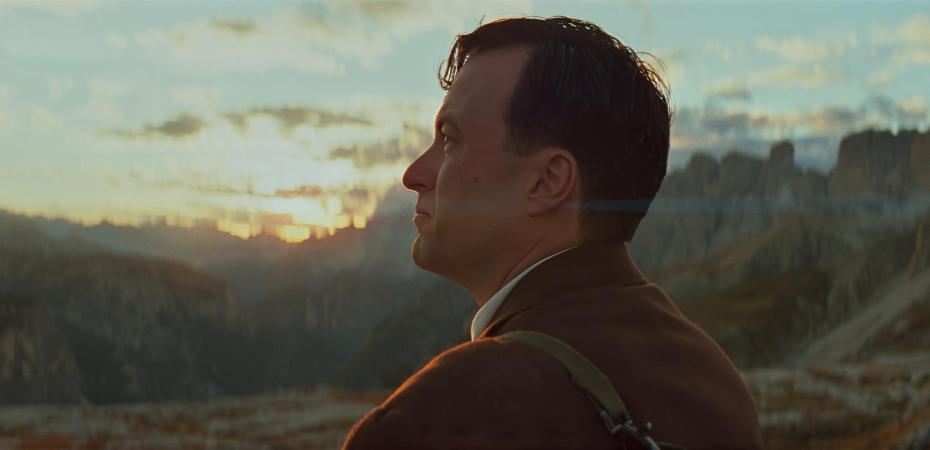
Written and directed by Harald Swinkels, in the wake of World War II, Josef leads his wife Irene and their young son Rolf through the beautiful yet unforgiving Dolomites, fleeing an unnamed threat. Starring: Bastian Beyer, Magdalena Müller, Gonny Gaakeer, Tom Peper and Johannes Zeiler.
As soon as you delve into Odessa, you can feel that something is amiss. There’s a suspicious note lingering in the air which communicates the strangeness and deception of this story. It’s a compelling atmosphere and Harald Swinkels builds a great deal of tension. The location choices are undeniably a part of that, aesthetic landscapes are always wonderful choices for injecting ominous, curious and dubious tones. Swinkles keeps things moving well, the characters are constantly journeying forward while the film slowly draws back the curtain on their origins.
However, it is fairly easy to predict where this is going, and it begs the question of: is this a perspective which audiences still want to explore? We’ve seen it quite a number of times at this point and yes, that discussion of culpability and complicity is still a very relevant one, but it doesn’t feel like Odessa has a lot to add to that conversation. Especially because it’s predicating itself a lot upon the idea of viewers sympathising with these characters through their plight and care for their son, which is not a given.
Bastian Beyer’s portrayal of Josef is a great one, it’s charged and relentless with a slight edge of unhinged, but he’s not exactly trustworthy. Right from the beginning he feels off, he’s not hiding his darkness, it comes out in his tone and inflections, so you’re wary of him the entire time, well before his background is revealed. Similarly, as his wife Irene, Magdalena Müller gives an emotional performance filled with exasperation and desperation while remaining composed for the sake of their child, but we know where it’s headed so it can only add so much. It’s really only Rolf’s (Tom Peper) naïve and blinkered perspective which has more to say, but it doesn’t receive much focus.
Odessa has plenty of suspicion and tension, but its tone is much more contemplative than the actual story. The filmmakers build a frame to try and tell this tale of complex ethical and moral questions but never really fill it. The foundation is there but the story feels too familiar and a little bit sparse, to make a powerful statement. It’s shot well and the core trio give great performances so there’s more than enough to enjoy but it misses the mark with its attempt to create a potent, striking debate on complicity through simple empathy.

