
Written and directed by Luc Besson, when a 15th-century prince denounces God after the loss of his wife he inherits an eternal curse: he becomes Dracula. Condemned to wander the centuries, he defies fate and death, guided by a single hope – to be reunited with his lost love. Starring: Caleb Landry Jones, Zoë Bleu Sidel, Christoph Waltz, Matilda De Angelis, Ewens Abid, Guillaume de Tonquédec and David Shields.
Bram Stoker’s Dracula is an enduring, iconic, beloved piece of gothic horror and many have adapted it over the years, not all have done it well and neither does Luc Besson. It’s very clear from the opening scene what Besson’s intentions were with his Dracula, and that’s to turn it into an epic romance, with a touch of horror, rather than respect its roots. A choice that will disappoint many, even if the lacking quality will probably be of no surprise, given Besson’s track record in recent years.
Not only is the opening scene banal in tone, it’s also a banal visual which sets up the majority of what’s to follow. The cinematography is incredibly bland, it rarely ever gets a grasp on the type of richness and texture that this period calls for. Mixed with the problem that Caleb Landry Jones isn’t really the type of actor built for that kind of overt sexuality and romance. The power, longing and thirst, the greed and violent sides of his character he can capture extremely well, but throwing him into sex scenes feels like a misstep, especially opening the film with it. He gives a great performance, but it feels like it would have been better served in another film.
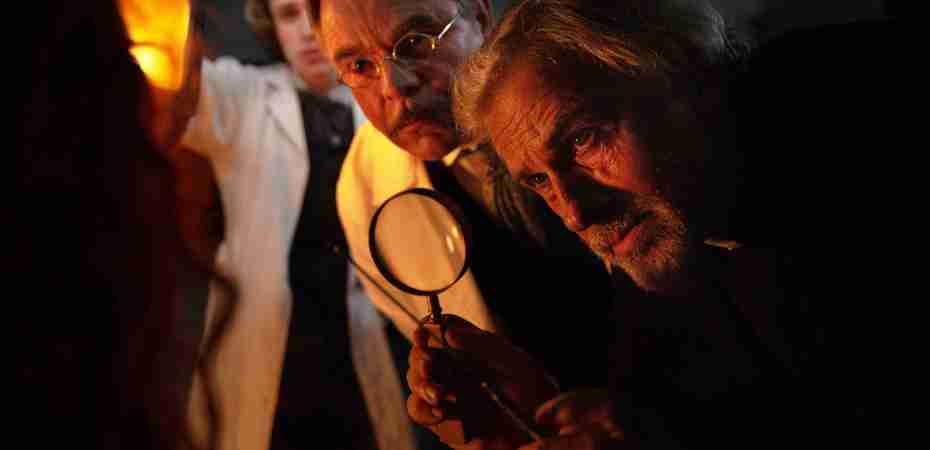
Arguably, things do improve as Christoph Waltz enters the picture, as any film would. He brings a captivating presence, and is inherently convincing in whatever role he takes on. Waltz has an effortless charm and here giving him a slight detective edge and penchant for darkness, fits him very well. Ewens Abid also gives a solid interpretation of Harker while Matilda De Angelis fleshes out the usual harpy victim, creating a party girl-vampire-servant mix that works surprisingly well. Guillaume de Tonquédec is similarly a great addition but Zoë Bleu Sidel on the other hand is disappointing, her delivery feels unnatural, and her portrayal of the characters feels indecisive.
Dracula makes a weak first impression and never improves upon it. Trying to morph such a classic tale into a lesser version of itself was a disappointing concept from the beginning. It loses all of the thrill and sinister edge in favour of something ostentatious and amateurish. It’s blandly shot, drawn out and does no justice to the majority of its cast that are endlessly trying to elevate this film, but unfortunately, it still falls dramatically short. This budget and cast could have created something special in better, more deserving hands.
 FilmCarnage.com