
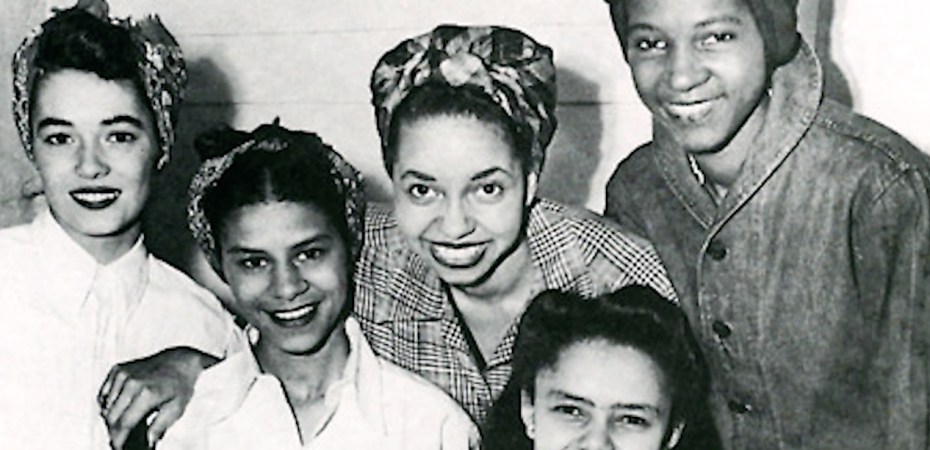
Directed by Gregory Cooke, while World War II raged on in Europe, 600,000 black women served the country on the homefront, breaking racial and gender barriers by working in factories and offices. Helping to win the war, paving the way for future generations, and transforming civil rights and women’s opportunities, their courage and resilience forever changed the American workforce. Featuring: Regina Robinson, Alice Amaro, Bernice Bowman, Birdia Bush and Gwendolyn A. Faison.
Despite living in a country that loudly and violently rejected their presence, thousands upon thousands of black people across the US stepped up and did their part during World War II. Yet, even when they did act patriotically and unselfishly, they still faced endless prejudice, with people often reluctant to accept their help for ‘vital roles’ in the war effort. Invisible Warriors explores the women’s point of view, and how their determination to join the workforce and move into areas that weren’t typically open to women, and especially not women of colour, sparked a new future for those that came after them.
It’s utterly captivating to watch these honest, kind-hearted, intelligent, committed women recount the obstacles they faced, but also the joys they found in learning new skills. So much so, that you already have an excellent foundation, there’s very little else you need to do. The stories speak for themselves, particularly those that delve into how different races in many instances all worked together in harmony during the war, but it purposefully was not shown to the media or press, to continue forging a society filled with segregation and racism.
However, considering that Invisible Warriors comes in at under seventy-minutes, it then tries to also explore the civil rights movement and unrest following the war, which there simply isn’t the time for. Admittedly, it is a very natural segue to move into the world that black people in America faced when the war ended, but that needs a whole film of its own, if not several. Especially since the documentary then circles back to the war at the end, when it needed to stay on track and focus on the key story it was telling.
It’s also extremely lacking in any style, it feels very much made for television or educational purposes. It’s missing a subtlety or smooth flow, something to bring the stories of these different women together with more of a punch and empowerment. It’s undoubtedly a documentary that is substance over style, it has the right content, but it’s presented in a very basic fashion.
Invisible Warriors is a worthwhile watch to capture the hard work, resilience and commitment of black women during World War II. It’s great to see it particularly highlight Mary McLeod Bethune, who deserves to be mentioned much more frequently when delving into the civil rights movement. The style may be old-fashioned and overly simplistic, but you can’t deny the quality of its stories and the value in giving a platform to these inspiring women to recount their experiences, both the good and the bad. It’s a clear example of how so many communities across America have stood tall and acted generously despite facing such hatred and bigotry, something that sadly remains very relevant today.
 FilmCarnage.com