
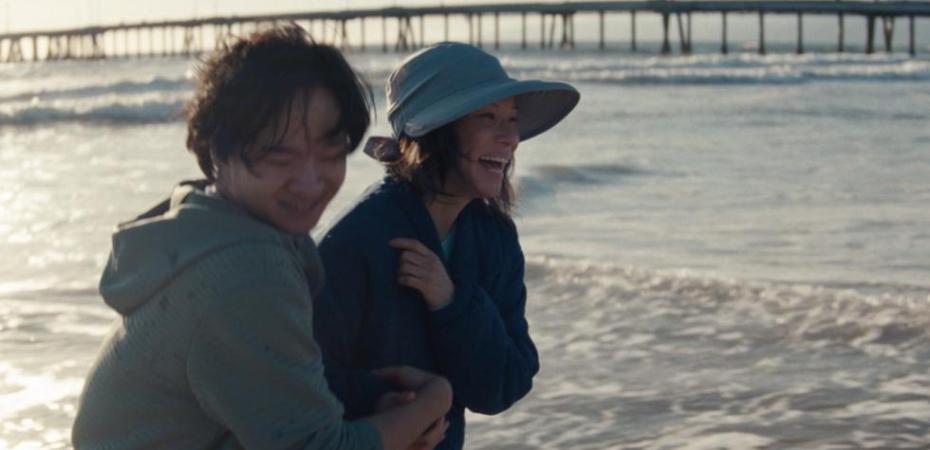
Directed by Eric Lin and written by Marilyn Fu, in a race against time, an ailing woman discovers her teenage son’s violent obsessions and must go to great lengths to protect him, and possibly others, in this portrait of a Chinese American family. Starring: Lucy Liu, Lawrence Shou, Orion Lee, Jennifer Lim, Madison Hu, James Chen and Eleven Lee.
It never hurts to have more reminders that old fashioned, closed-minded attitudes towards mental health are damaging and dangerous. Rosemead perfectly captures that, in devastating fashion. While adding the ‘inspired by a true story’ moniker can often simply be used as a ploy to boost interest, here it truly drives home even further the pain of this story. Tragic isn’t really a strong enough word for what unfolds in Rosemead, it’s shattering to watch two people in such difficult circumstances have the world around them, including their own community and friends, make it even more difficult.
The way that you can so easily see how this could have happened in real life makes it hard to watch. Not only does it explore that stigma of mental health but it’s how the authorities deal with incidents involving mentally ill people. There’s such a lack of awareness and compassion, even a resentment towards them, especially when they’re also immigrants or people of colour. All of those elements snowball together to create the deluge of damage that Rosemead explores.
Eric Lin is very thoughtful in how he delivers that suffering and spiralling, there’s a quietness and reserved nature to the style, nicely reflecting the personalities of its characters. There’s a nostalgic, gentle quality to the cinematography from Lyle Vincent, it captures the classic California feel while holding a thorough sadness. There’s a dense atmosphere of worry and denial which is invading and gradually grows heavier. Especially as Lin cleverly uses sound early on to set the tone, foreshadowing the anger, sadness and helplessness to come.
Undoubtedly all of that is then anchored by the performances from Lucy Liu and Lawrence Shou. While the intensely heavy aspects of this story are always going to be that focus, that shouldn’t undermine that Liu and Shou also build a genuine relationship. They create a convincing, touching mother-son connection, which they deserve even more credit for because it’s often hidden behind the fractured nature of their situation.
While warmth and sincerity are something we’ve seen from Lucy Liu time and time again, it’s rare to see this type of deeply earnest, tense performance from her. Rosemead gives her the chance to prove again the depth of her talent, and it’s a striking, distressing portrayal. The unending conflict that Irene experiences is nothing short of torturous, both physically and mentally. Liu really gives this character everything she’s got and it’s phenomenal to watch.
She’s then excellently supported by Lawrence Shou who really throws his body into this performance as Joe, to capture the complicated nature of his illness. Particularly how everything can change so suddenly, how violence and destruction can become an outlet and how often there’s little that can be done to help, but unlimited things that can be done to make things worse. Shou’s portrayal is intense and impressive. It’s also great to see the lovely Madison Hu, who can also currently be seen in Netflix’s Man on the Inside, she’s one to watch.
Rosemead is one of those films that leaves you reeling when the credits roll, giving you the chance to reflect on all the pain, and needing a minute to recover from the harrowing nature of this tragedy, and the true story that inspired it. It’s wonderful to see Lucy Liu taking on this kind of role, as she’s such a fantastic actress, and her range and depth are often underestimated. Her performance is extraordinary in the most humble and grounded of ways. It’s a deeply poignant reminder of how delicate mental health is, and how necessary it is to have a support system, access to resources and knowledge of how to handle such complex situations. As without them the results can be devastating, just as Eric Lin and Marilyn Fu thoughtfully and respectfully capture in this film.
 FilmCarnage.com