
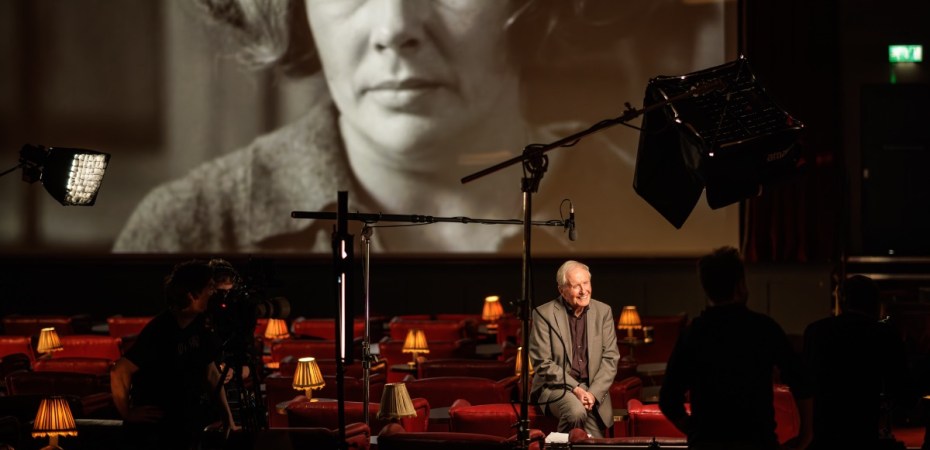
Directed by Andrew Gallimore and Lydia Monin, former Censor John Kelleher reveals how the decisions of the Irish Film Censor have mirrored the political, social and cultural evolution of Ireland itself.
In today’s society political correctness is often weaponised, implying that we’re weakened by attempting to be more understanding and respectful, whereas looking back at the twentieth century and censorship in particular, In the Opinion of the Censor is a fantastic example of making too much effort to be inoffensive, with a negative, patronising result. It will be of no surprise to anyone with any knowledge of the history of Ireland and its religious, traditional and intensely modest beliefs that censors of the earlier days of cinema could find anything and everything to take issue with.
Immediately, Andrew Gallimore and Lydia Monin portray how decidedly film in Ireland was impacted by that single-minded, prudishness. Skewing the perspective and undermining film for the sake of pushing ‘family values’, leaving cinema goers of the time missing out on some of the seminal films in the history of cinema. Even when they weren’t banned, and they did get a chance to see them, they could be so heavily edited that they would no longer reflect the filmmakers’ intentions, making for confusing viewing.
Gallimore, Monin and John Kelleher keenly show the line between trying to create audience awareness in choosing what to watch, and overbearingly trying to dictate and reinforce the values of the time, according to the government. It’s not a revelatory watch, most of the information feels fairly straightforward and expected, but there are some interesting inclusions. For instance, how Casablanca was cut by the censors versus something like Gone with the Wind. It’s always nice to see those clips of such classic films and Kelleher’s narration is well done, with a guiding, soothing tone.
In the Opinion of the Censor is one of those documentaries that isn’t going to blow your socks off with scandal, shock or surprise but it’s a well put together exploration of an interesting issue for cinema fans. It’s intriguing to portray the perspective of Ireland’s past censors and how they could take issue or offense at the slightest thing that might possibly encourage women to be different, or to divorce their husbands. Especially in how that could then entirely undercut the enjoyment of cinema goers and entirely removed the opportunity for them to make up their own minds about the issues explored in film. It may not be very unexpected, but it may make you appreciate even more the freedom of choice we have with our viewing pleasures today.
 FilmCarnage.com