
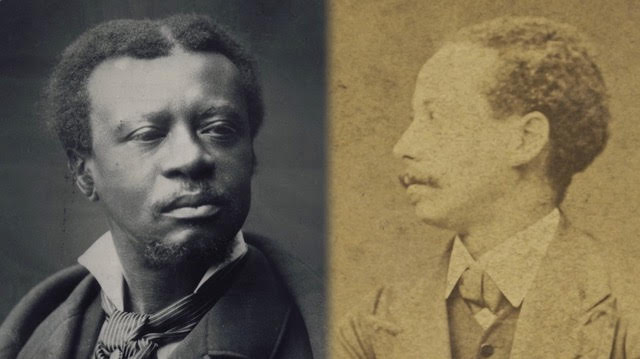
Directed by Sascha Just, Basile Barès and Edmond Dédé were Creoles of Color – Dédé a free man, Barès born into enslavement. Against the pressures of racial injustice, both wrote and performed operas and concert pieces popular with black and white audiences, challenging the notion that classical music has been an exclusively white domain. Yet, since their lifetime, their compositions have not been performed, and some have never been presented to the public. New Orleans musicians, pianist Oscar Rossignoli and the ensemble OperaCréole with the Louisiana Philharmonic Orchestra, are now resurrecting their works.
Stories like those of Basile Barès and Edmond Dédé are not commonly found in discussions of the history of slavery and the fight for abolition, and they are certainly worth telling. Especially in how they were forging a community of integration at a time when the rest of the world was running headfast into deeper, defined segregation. Using music and culture to unite people of different colours, letting their skills and talent speak for themselves. Only to ultimately find themselves thrown backward with the Jim Crow laws, entirely undermining any chance they had to continue that path.
Which is exactly why it’s so lovely to see these musicians attempting to resurrect their work after being long buried and under-appreciated, to celebrate that larger meaning and impact. There are undoubtedly much more stories of artists whose work has been lost within a world of prejudice and discrimination, so it’s decidedly worthwhile to bring them into the light where you can. There’s a strong note of respect within What We Can Know About Edmond and Basile, Sascha Just really injects the atmosphere with admiration.
The documentary holds a very calm, kind presence, it flows smoothly and considerately, with a consistent tone. However, the balance between exploring them as artists and the history that goes along with their journeys isn’t always strong. There’s the tendency to let tangents run on much longer than needed.
Unfortunately, the impact that then has on What We Can Know About Edmond and Basile as a whole is that it doesn’t feel as though the knowledge and story is building upon itself. Instead, it feels like interesting anecdotes strung together which don’t ultimately arrive at a point where you can feel you now genuinely know their story. The style also feels as though it needed some finessing, particularly when it comes to using title cards. The editing makes it seem like the film itself has entirely frozen rather than seamlessly adding the information to the screen.
What We Can Know About Edmond and Basile has a great story to tell and telling it through the musicians who have such a deep passion for the work was a lovely choice, however as a whole it doesn’t feel entirely effective. There are some solid ingredients but the way that they’re presented is lacking impact and growth. The style is a touch too simple, and it doesn’t quite embrace the enthusiasm and creativity of the artists.
 FilmCarnage.com