
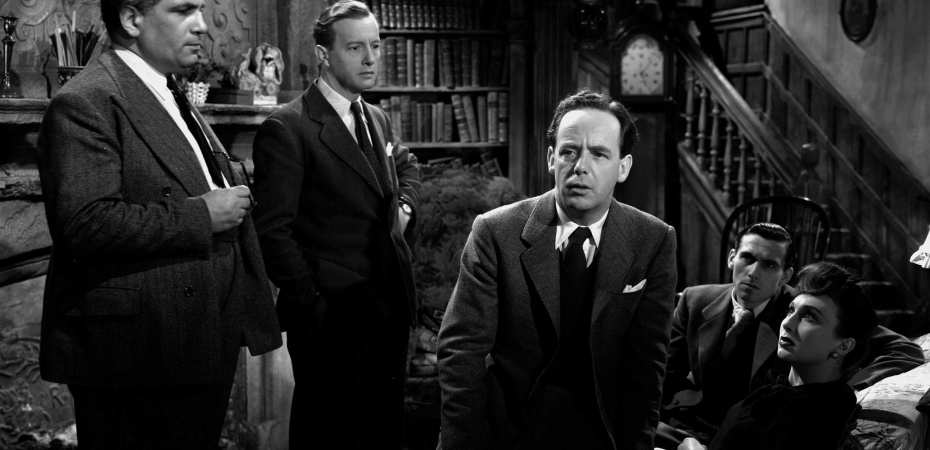
Directed by Alberto Cavalcanti, Charles Crichton, Basil Dearden and Robert Hamer, and written by John Baines and Angus MacPhail. An architect, visiting an English country house, realizes the other guests are familiar from his recurring nightmare. When they share their tales of the supernatural, he is filled with a growing dread. Starring: Mervyn Johns, Roland Culver, Mary Merrall, Googie Withers, Frederick Valk, Anthony Baird, Sally Ann Howes, Robert Wyndham and Judy Kelly.
If you were on the hunt for a film with some good old fashioned storytelling, Dead of Night would be an excellent choice. The way that these different curious, ominous tales blend together as less of an anthology and more of a winding evening of stories and dreams is quite impressive. It’s rare to find an example where pieces from different directors all work so cohesively together. There’s a strong charm that comes along with that smooth blend, it’s wholesome, inviting and intriguing.
The writing is also a fantastic example of the playfulness you can often find in classic film. How they have this ghost story-esque feel, bringing touches of darkness but never straying too far into it, keeping things family friendly with a dab of haunting. Especially because the different stories have different levels of macabre, allowing there to be a nice balance rather than constantly trying to one-up each other. They work really well to build an overall sense of mystery, as well as those contained within the individual tales.
Part of its charm is undoubtedly the ensemble they’ve put together, they have such a natural chemistry. It’s like a little family, they’re all very curious and encouraging, they create a roundtable of sorts to explore their debate. They also all do a terrific job of capturing the mix of energies that Dead of Night is building. The initial jovial quality added to a sense of wonder, with an edge of darkness and suspense. Capturing the entertaining feel while never undermining that potential for something murderous.
Its only weak point is when story time gets turned over to the resident psychologist and while the tale he tells is a good one, it doesn’t quite fit with the rest. Its tone and intentions don’t match the flow of Dead of Night overall, undercutting its great patter, and the film starts to go off the rails. The filmmakers then wrap it up in a very classic fashion, but it doesn’t feel like a clear cut explanation, even if it does work. Leaving things on a middling note for what is otherwise a great film.
Dead of Night is a fantastic piece of both classic film and storytelling in general. To create a film that so succinctly brings all these different pieces together is wonderful to watch. It’s shot well to create the perfect atmosphere, it has an impressive balance between playfulness and the macabre. There’s an excellent cast at work, it’s captivating and has a nice vein of suspense to it. It’s a superb example of how classic film had a much better grasp of creating a tone that’s both wholesome and sweet but with ripe potential for darkness.
 FilmCarnage.com