
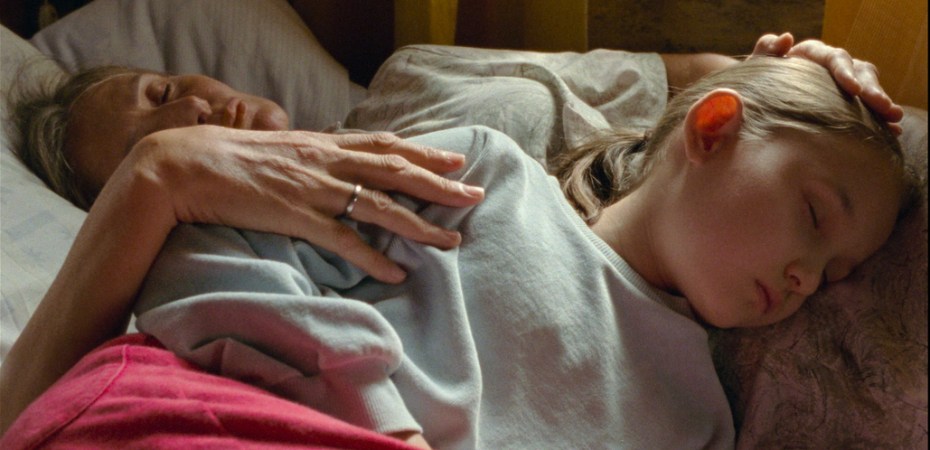
Written and directed by Nastia Korkia, co-written by Mikhail Bushkov, Katya, 8 years old, spends the summer with her grandparents in the countryside. Time stands still, adults remain silent, and a war in the background destroys lives. Meanwhile, kids are growing up, and the clouds are flying. Starring: Maiia Pleshkevich, Yakov Karykhalin, Aleksandr Karpushin, Vesna Jovanović and Aleksandr Feklistov.
With Short Summer, Nastia Korkia and Mikhail Bushkov aren’t simply giving viewers an experience, they’re challenging you. They’re asking more of you than your typical film because it’s pushing you to go beyond the usual perspective and to read between the lines. It’s presenting scenes to you that have a lot to say but they require you to be actively involved, unpacking scenes and piecing it together. It’s a bold choice to make, especially for a first narrative feature and it’s certainly going to divide viewers as to whether it’s enough to sustain 101-minute film.
It’s a valid question as there is precious little happening in Short Summer in the traditional sense, so it may struggle to hold your attention. There is charm to be found in its characters and the cinematography (by Evgeny Rodin) has a strongly nostalgic, gentle style. It certainly captures that meandering freedom and curiosity of a childhood summer. The notes of despair and conflict that Korkia brings through in the background to layer the atmosphere are well done.
There’s a great cast who definitely all perfectly understood what Korkia and Bushkov were going for. The performances are primarily very understated and capture that everyday, plain, honest style. Capturing the mundanity then peppering it with the complexity of living in a country at war, slowly degrading the adults who surround the children at the forefront of Short Summer.
If you’re willing to take the time to dissect the scenes and truly think about what these filmmakers are saying within them, you may strongly connect with Short Summer. However, in this day and age of short attention spans and desires for clear answers, it may struggle to hold some viewers’ attention, and they ultimately won’t get a lot out of it. It is undoubtedly not without its limitations, and it doesn’t fill its runtime as effectively as it could have. It makes its point quite early on and it’s a difficult style to maintain for over an hour and a half, but it’s easy to admire Nastia Korkia’s intentions and what Short Summer has to say.
 FilmCarnage.com