
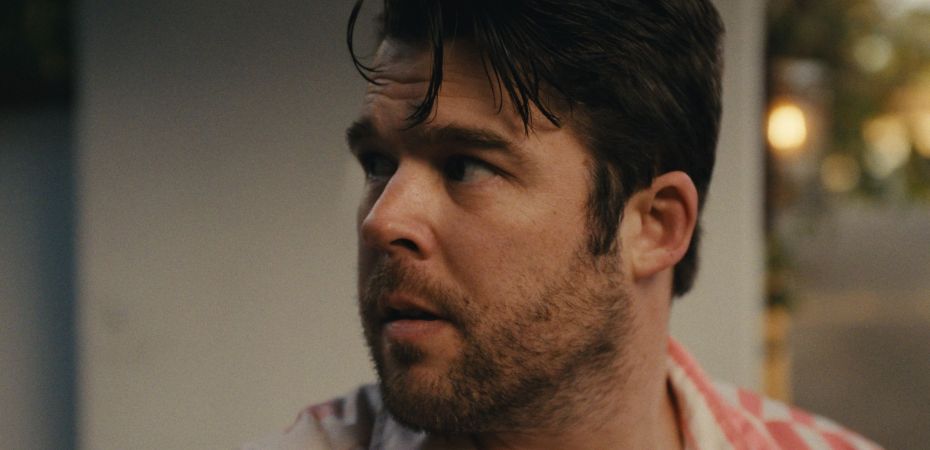
Written and directed by Francisco Infante, Owen Parker, a washed-up emo rockstar turned office drone, is jolted back to life when he receives a wedding invite from his long lost ex. Determined to win her back, he dusts off his guitar and embarks on a reckless mission to write the perfect song. Starring: Keegan Gogerty, Bambi Steffen, Casey Feigh, Cecil Jennings, Amber Pilarita, Sonny Lira and Maya McGowan.
One thing that’s very clear with King’s Cup is that this one for the millennials, and in a big variety of ways. It’s not just the Fall Out Boy, Panic at the Disco!, My Chemical Romance vibes to the music and tone, or even just the mundanity draped existential crisis of what am I doing with my life? Did I squander my potential? But also, the character of Owen Parker (Keegan Gogerty) himself feels pulled out of the films that people in the 2000’s grew up with.
However, thankfully, while he does have the reminiscent selfish, fairly obnoxious, lack of self-awareness, misguided romantic, he is far from those grating, sexist, vain characters. Instead, what you get is a relatable mix of unearned confidence and desperation. Francisco Infante sets Owen off down a path to a genuinely terrible decision and leaves audiences waiting to see whether he’ll get there or what miracle it will take to snap him out of this downward spiral.
Along the way, Infante genuinely makes the most of Owen being a musician, it’s not simply a lot of brooding and writer’s block, along with Gogerty, they actually create some great nostalgic songs. Especially as Infante uses those musically driven scenes to bring through a vein of imagination, letting Owen drift off into his own world in those moments. As King’s Cup is so strongly contained within a very small environment, it was a clever choice to really open things up and prevent it from ever feeling claustrophobic or stagnant.
It’s also a good choice to help King’s Cup enhance its energy and pacing, it’s one man turning in on himself and getting lost within his breakdown, but it has a surprisingly hyper edge to its depressive nature. It’s almost akin to depressed Ben in Parks and Recreation, uber focused and committed, while in complete denial about his true emotional state and situation. In the same way that it brings through an intense awkwardness with a big dollop of naivety. It all does an excellent job of encompassing that feel of missing the boat, that life is moving forward without you, which is definitely something most people can sympathise with.
Undeniably another big part of what makes it work is the performance from Keegan Gogerty. With it being so singularly focused and Owen not making inherently likable choices, without the charm of Gogerty, this could have easily fallen flat. Gogerty makes it easy to see the good beneath those terrible decisions, communicating Owen’s fear of rejection and failure, causing him to take the easy path that he then incessantly resents. There’s a great balance between talent, affection and delusion, to create an enjoyably messy time.
A balance that’s really well represented by Infante’s direction, it holds onto the low-key charm of King’s Cup on the whole but peppers in bigger moments of personality. Particularly in how its world of imagination is firmly rooted in emo, punk, rock music videos from the 2000’s. They add a great variety as well as injecting some extra colour into the mix. It hits the right tone to do justice to both Owen’s struggle and his desire for success and redemption.
King’s Cup dives into the world of a millennial, feeling disappointed with life, short-changed on your potential and perhaps finding many other things to blame before eventually pointing the finger at your own actions. Keegan Gogerty’s Owen is quietly charming, finding the goodness in-between his layers of blind confidence and self-destruction. Along with Francisco Infante’s writing, they create a highly relatable story of a downward spiral and fear of failure and rejection.
Owen’s sense of delusion is nicely built into the direction, so it can veer off into his imagination without ever losing its grasp on reality. There’s a touch of aggression and Owen can be obnoxious, but Infante does well to stay within that realm of everyday awkwardness and struggle, never letting it become dour or irritable. It envelops a lot of relevant questions about where the line is between playing it safe and being responsible, and not taking any risks and squandering your potential. Not to mention hyper-fixation on a project to avoid actual responsibility. All while simultaneously creating genuinely good music that will very effectively strike the nostalgia button for millennials.
 FilmCarnage.com