
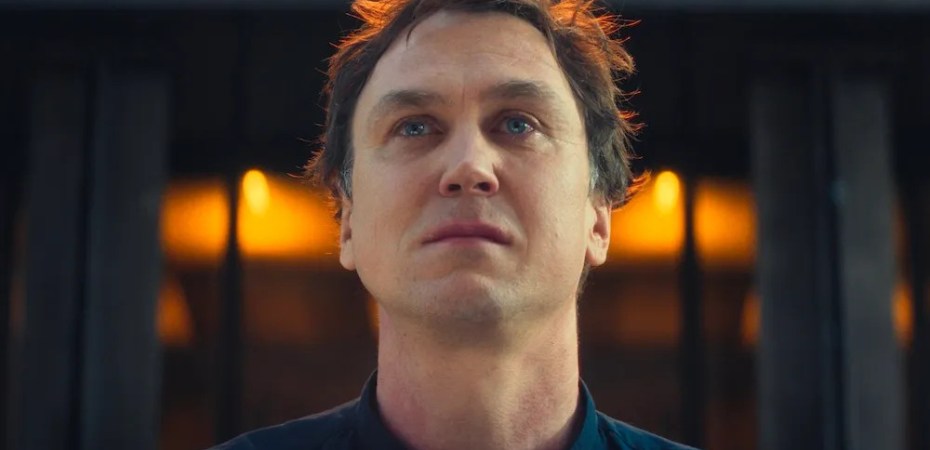
Written and directed by Matthias Glasner, Mother Lissy, father Gerd, son Tom and daughter Ellen: the members of the Lunies family are estranged. But confronted with death, they finally meet each other again. Starring: Lars Eidinger, Corinna Harfouch, Lilith Stangenberg, Ronald Zehrfeld, Robert Gwisdek, Hans-Uwe Bauer, Anna Bederke, Saskia Rosendahl, Nico Holonics, Catherine Stoyan and Saerom Park.
Some films just give it to you straight with their titles and Dying is definitely one of them, because it unquestionably lives up to the name. Facing mortality can cause people to explore a lot of complicated emotions and that’s exactly what Matthias Glasner captures here. There are a lot of uncomfortable and complex conversations to be had, plenty of grief and seemingly unending sadness. Glasner capitalises upon that discomfort, it becomes the foundation of the experience of watching the film and works surprisingly well.
However, he also plays against that, he adds in the highs with the lows using birth, love and music. The latter in particular is an unexpected asset, having those big orchestral pieces really elevates the emotions to the story and creates some of the sincerest moments of the entire film. Especially when that feels so sophisticated and eloquent whereas a lot of the dialogue can be very blunt, it’s an interesting blend. Although some of the stories do feel stronger than others, Lilith Stangenberg’s Ellen is a jarring transition from the rest of Dying.
Moving it vastly away from its slow, grieving and melancholic tone into something harsh, chaotic and messy. It intriguingly adds in a huge intensity, particularly because she’s a person with a drinking problem working as a dental hygienist where all sorts of horror-film type moments could possibly occur. It works well on its own but doesn’t feel entirely fitting with the rest of the film, it’s still filled with complicated emotions but they’re much more familiar and less interesting than that of Lissy (Corinna Harfouch), Gerd (Hans-Uwe Bauer) and Tom (Lars Eidinger). Although Ellen’s story does bring the opportunity for a fantastic, charming, generous performance from Ronald Zehrfeld.
The performances are something that’s great across the board. The sheer amount of tension, repressed emotion and bubbling resentment that goes between every character is portrayed wonderfully. Lars Eidinger delves into a personality that’s composed on the outside but utterly broken on the inside, unable to process his feelings. Corinna Harfouch is fascinatingly cold on the outside but well-meaning as Lissy, it’s a strange type of honesty which is captivating to watch. Hans-Uwe Bauer’s Gerd is rapidly declining and doesn’t give Bauer that much room to work with and yet he does still manage to get across his emotions. Lilith Stangenberg is the epitome of a hot mess as Ellen, skating by with little thought to the consequences of her actions, it’s even hard to watch at times.
Visually it’s reminiscent of Christian Petzold’s work, finding the depth and the richness, really enhancing the aesthetic. It’s genuinely satisfying to watch unfold, Glasner’s direction and Jakub Bejnarowicz’s cinematography really have a firm grasp on the complexity of the story and the emotions. They fill the air with all of that resentment and tension, it’s certainly not light but it’s also impressively not overwhelming. The only key issue that prevents all of that from really striking a deep, poignant note is the runtime. Coming in at three hours long, it’s simply drawing itself out too far, it loses its impact and it’s fairly plain to see that there was fat to be trimmed, as it can be slightly repetitive at times.
Dying is compelling and striking but undermines itself with such an indulgent runtime. If it could have sharpened up its progression and pacing, this could have packed a bigger punch as all the other ingredients are there. It’s visually superb, the performances are exceptional, and it has a fantastic handle on discomfort, pushing those uncomfortable conversations and facing those difficult emotions and hard truths. It captures the highs and lows of life, the shattering impact of illness and the complicated nature of family. It’s so close to being something really special.
 FilmCarnage.com