
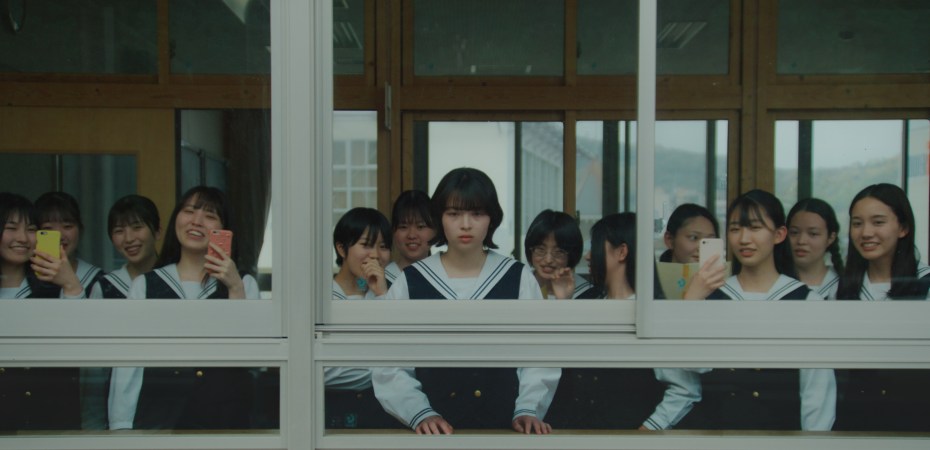
Written and directed by Masaki Nishiyama, Elena, a “half” Japanese girl, struggles with her identity. While constantly watched, she discovers she’s also being watched by something else-a monster that can only be seen through her smartphone and heard through her earphones. Starring: Lisa Siera, Miyu Okuno and Runa Hirasawa.
Horror has many times over proven itself a perfect genre to explore issues of race, identity and alienation, so Elena’s (Lisa Siera) story was always going to be a great fit. Masaki Nishiyama quickly creates a lot of tension, while also bringing through strong notes of mystery, fear and suspicion. The atmosphere is dense with self-doubt and frustration, fuelled by the intense pettiness and prejudice of the typical teen bullies. There’s a strong aesthetic, added to a lot of excellent lighting work and an appreciation for colour. Visually, it’s really hit every note it needs to, to make The Invisible Half a success but the story feels like it falls short.
It moves extremely slowly and doesn’t add a lot of detail or expand the plot and be adding to itself rather than simply relying on anticipation of the finale. The themes are all perfectly relevant but the catty girls trope feels quite tired in this day and age, and with The Invisible Half relying on it quite heavily, it becomes more of a hinderance. Also, with race and identity being such a huge part of this story and Elena’s experience, it goes surprisingly underexplored. It never deals with it in a complex manner, instead being represented through stereotypical bullying and everyday prejudices. It does finally open itself up in the ending but it’s too late and it doesn’t feel as though everything has been explained as much as it needed to be for it to pack the metaphorical punch that it’s going for.
There’s also a tendency to use sound to represent having earphones in, which initially is an interesting choice but as time goes on, and you’re forced to listen to muffled dialogue repeatedly, it becomes irritating. The good intention is there but after a while it feels unnecessary and distracting. It’s also surprising to find that the massive potential for a queer storyline goes unexplored which was a shame because Lisa Siera and Miyu Okuno definitely have a strong chemistry.
Siera gives a fantastic performance in the leading role, filling Elena with insecurity, vulnerability and yet plenty of strength and resilience. She makes for a great guide to this story and it’s even more satisfying to watch when she’s brought out of her shell by Okuno’s Akari. The two of them have such a wholesome connection that’s fraught by all the usual high-school obstacles but ultimately built upon kindness.
The Invisible Half has a great deal of potential but doesn’t always manage to fulfil it. The direction, performances, editing and atmosphere are all ticking the right boxes. It’s tense and fractured, with an air that’s ready to implode at any minute, but the story doesn’t make the most of that. The progression and pacing are too slow, it’s not continually adding to itself, rather mostly treading over the same ground until the final scenes, leaving things too late. It’s unfortunate as with more story development, it could have really elevated itself into a very strong piece of horror.
 FilmCarnage.com