
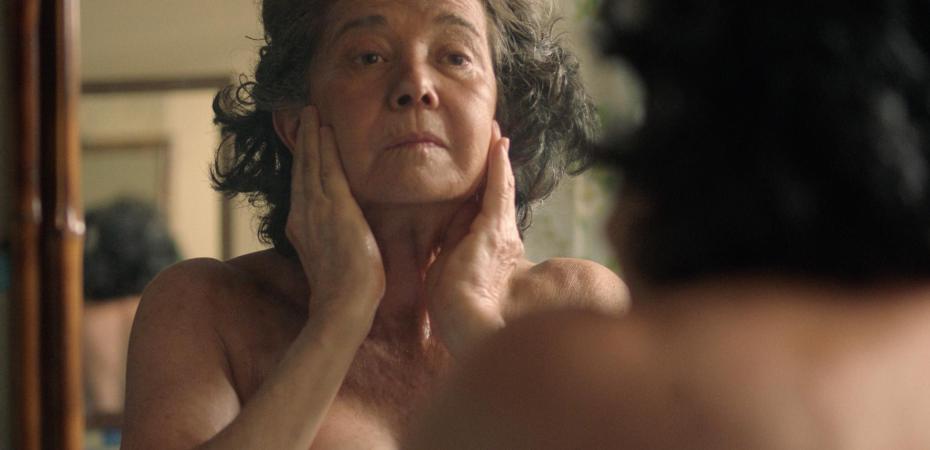
Written and directed by Antonella Sudasassi, Ana, Patricia and Mayela grow up when sexuality is taboo. Now channelled as one 65-year-old, the protagonist revisits intertwined memories, secrets and desires, giving voice to unspoken past experiences. Starring: Sol Carballo, Paulina Bernini Viquez and Juliana Filloy Bogantes.
Immediately Memories of a Burning Body creates an endearing atmosphere, an instant connection with these charming, funny women before they start to unpack all the complex topics at work here. It’s still not all that common today in the media to have older women talking about sex, let alone talking about any issue related to sex when these women were in their youth. So, to have walk through those experiences with honesty and frustration, reflecting upon the injustice of their treatment, is genuinely moving.
Antonella Sudasassi takes on an unusual style, instead of creating a documentary, Sudasassi uses a dramatic style to weave past and present. It can perhaps spend a bit too much time on burgeoning sexuality, when there are much heavier and poignant issues at work but there’s a lot to say. The most interesting topic is that of guilt, and how it festers over time and has in itself far reaching consequences, added to the impact of the abuse or mistreatment. As well as how that trauma can go on to become generational.
However, it is a style that won’t work for everyone, it has a certain meandering quality, it’s not defining its chapters and characters clearly. It feeds into the idea of how so many women have experienced something similar but it can hinder a bigger impact. The stories and topics are important ones, but there could be a better balance of them and the style is lacking some power.
Memories of a Burning Body explores trauma in an endearing and touching way. Dipping into the idea of how those experiences move across generations and how women have been so often ladened with guilt and shame after experiences of abuse. It can feel a little too loose, taking a casual journey through these stories rather than giving them a sharpness and power. They’re poignant stories and that conversation of victim-blaming and shaming is very much still relevant, but it’s not quite done full justice here.
 FilmCarnage.com