

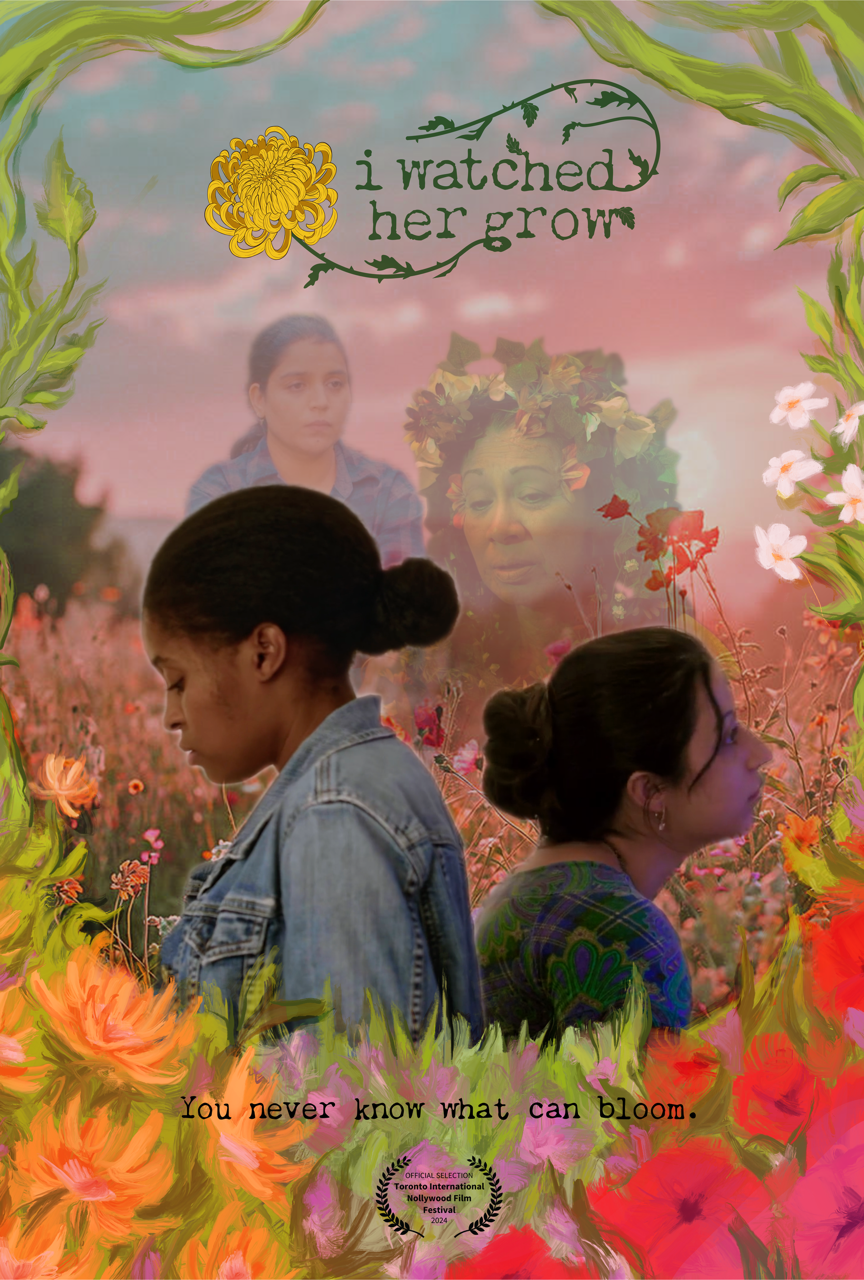
Written and directed by Shea Formanes, a struggling botanist confronts her mother’s death after taking in an enigmatic teenager. Starring: Taylor Freeman, Michelle Colman Padron, Eloisa Cardona and Aarti Tiwari.
At the heart of I Watched Her Grow, there’s a touching story of finding unexpected connection and a shoulder to lean on in times of struggle, grief and trauma. Michelle Colman Padron and Taylor Freeman create an interesting dynamic, the connection is instant and yet they’re both extremely removed and far from forthcoming with personal details. It’s unusual yet it feels quite natural, they simply fall into a comfortable pattern. It creates the foundation to the film as it explores some much more unique avenues.
That’s where things get a little tricky, there’s more than you might expect going on with I Watched Her Grow and it feels like it was one or two too many elements to keep a firm grasp on, especially in under seventy minutes. Each of them works in their own way but its floral escapades can feel like they’re not explored enough to truly blend together with the rest of the film. Although Shea Formanes brings some interesting parables to dignity in death to the table, as well as familial relationships.
It’s one of those features that you can sense is a first outing, it has a few teething issues and rough edges. The title cards in particular can feel a bit messy, not quite serving their purpose. The colouring can move from everyday to a dream-like haze throughout the film, while not developing the atmosphere or separating scenes distinctively. The audio can be rocky, with occasionally too much ambient noise, becoming slightly distracting, as well as the dialogue being stiff at times. They’re all minor issues, things that needed smoothing out to let the film push itself further.
A lot of I Watched Her Grow is seeing the potential in its creativity. It’s undoubtedly a feature that’s been injected with curiosity and imagination, it just can’t quite bottle it all up neatly. Shea Formanes tried to compact a fairly complicated story into under seventy minutes, which is a tricky thing to do, there’s a number of ideas that are intriguing but don’t have the space to develop fully. It feels as though there was a bigger cultural exploration of trauma beginning to grow but we don’t get to see it to fruition.
Verdict: ✯✯✯ | 6/10
Celebrated its World Premiere as part of Toronto International Nollywood Film Festival on September 12
 FilmCarnage.com