
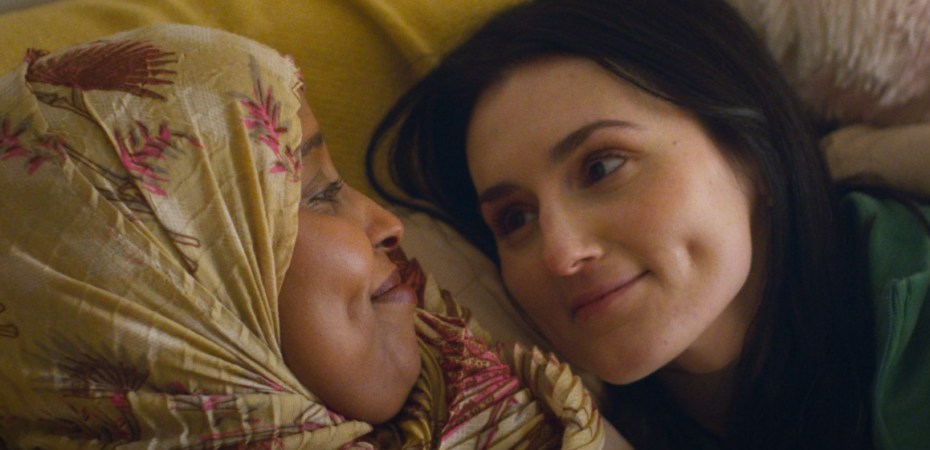
Written and directed by Daisy-May Hudson, Molly, a young woman released from prison struggles to regain custody of her children. When she bumps into her childhood friend Amina the two women soon realize their only chance is to join forces and take destiny into their own hands. Starring: Posy Sterling, Idil Ahmed, TerriAnn Cousins, Aliyah Abdi, Tegan-Mia Stanley Rhoads, Luke Howitt and Johanna Allitt.
Historically the explorations of the struggles of motherhood in film and television would be fairly thin and either purely focused on hope rather than reality or negative representations. So now that we’ve slowly arrived in a landscape where it can be shown for what it is, it’s satisfying to watch portrayals such as Lollipop which give an earnest perspective on motherhood, the justice system and social services.
One thing that Daisy-May Hudson does a wonderful job of demonstrating with Lollipop is that these systems put in place to protect children are not built for vulnerable parents. Especially those who don’t have a support system in place, whether that be family or friends. Hudson delves into the deep frustrations of dealing with the bureaucracy and constant setbacks, setting a necessary level of discomfort to drive home the poignancy.
An aspect that’s then balanced by the relationship between Molly (Posy Sterling) and her children, Ava (Tegan-Mia Stanley Rhoads) and Leo (Luke Howitt). It’s simultaneously difficult to watch and touching to see these characters have such a strained yet loving relationship. It’s a superb example of the emotional maturity and resilience that children of the foster system have. Particularly through Rhoads’ performance, she’s a talented young actress who has a great deal to add to the emotional atmosphere of Lollipop.
Sterling’s performance does the same but she takes things further by adding a compelling intensity and combustive nature. It’s captivating to watch her so badly want to explode with all the frustration but having to remember that she’s doing a disservice to her children to not keep her composure. It’s an unenviable position and one that Sterling truly does justice to, she brings such a powerful, raw performance.
One that’s only further improved when we get to see her relationship with Amina (Idil Ahmed) which both demonstrates the power of female friendship and another perspective of motherly struggle. Watching the two of them support one another and find solace in their combined battle is genuinely moving. It’s certainly an aspect that helps Lollipop hold onto a sense of hope, so it doesn’t completely descend into the darkness of a broken system.
Lollipop is heart-wrenching and purposefully uncomfortable to cement its poignancy. It reminds slightly of Phyllida Lloyd’s Herself, in how it portrays a realistic view of motherhood for vulnerable, struggling women. Posy Sterling gives a terrific and enthralling lead performance, and she has some wonderful support in Idil Ahmed and Tegan-Mia Stanley Rhoads. The justice system and social services in the UK are not explored enough in film and television to portray how they aren’t typically built for rehabilitation or vulnerable people, so it’s great to see Daisy-May Hudson tackling it here.
 FilmCarnage.com
[…] nature of its subjects. It makes a great comparison to see both Holloway and Daisy-May Hudson’s Lollipop, very different perspectives in using documentary versus fiction but both compellingly telling a […]
LikeLike