
Written and directed by Hadley Austin, co-written by Tommy Rock, who also stars in the documentary. A portrait of life in the radioactive desert on the Navajo Reservation, following a group of indigenous scientists, elders, and activists as they work to protect a vital living space on contaminated land. Starring: Clayson Benally, Janeda Benally, Jones Benally, Deb Haaland, Jesse Holiday, Terry Keyanna, Leona Morgan, Helen Nez, Emma Robbins and Lisa Robbins.
Despite films like Oppenheimer bringing the creation of nuclear weapons back into the conversation, it’s rare to actually see any discussion of the far-reaching and lasting consequences for everyday people. Even more so to dive into how nuclear testing is forever melded with systematic racism against indigenous peoples. So, to have films like Demon Mineral bring the subject to the forefront, is a wonderful thing but it feels as though the style that Hadley Austin chose, isn’t entirely suited to the importance and poignancy of the topic.
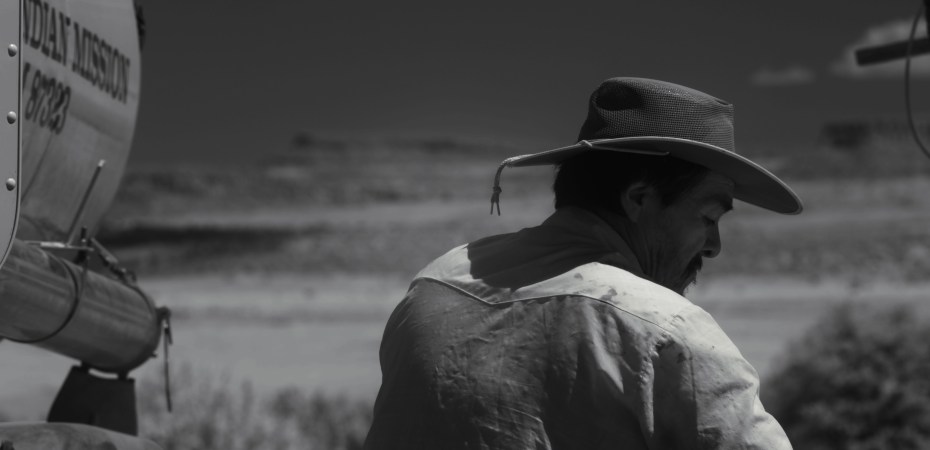
Austin attempts to flow through this story in an artistic manner, whether that be through music or the mix of using colour or black and white. You can see the intention and it is an admirable one, but it pulls the film apart rather than strengthening it. Those especially stylised moments don’t fit with these touching, personal stories of how communities have been irreparably damaged, undermined and patronised by government bodies. It calls out for a grounded, raw and straightforward tone because people like Helen Nez, who is a true highlight of Demon Mineral, don’t need embellishment, their words are enough.
The inspiration that you can so easily find in people like Nez, who are dedicated and unwavering, is a perfect foundation for a documentary. That’s why it’s a shame when the filmmakers include overly stylistic choices which end up feeling like distractions. It also puts limitations on the personality the film can build when it never spends enough time with the subjects, constantly moving on. The way that it moves is more akin to a podcast than a documentary yet there’s no key voice to guide viewers through this story.
Demon Mineral has a vital story to tell but doesn’t do it justice. The ingredients are there to give indigenous people the space to demonstrate the damage to their communities but the end result is messy. It has the best of intentions but it’s too focused on creating an artistic and stylistic atmosphere, taking away from the very personal, moving stories that its subjects have to tell. However, there’s no denying that more people need to know the information it’s offering, the harm that has been done is outrageous, yet it’s rarely acknowledged.
 FilmCarnage.com