
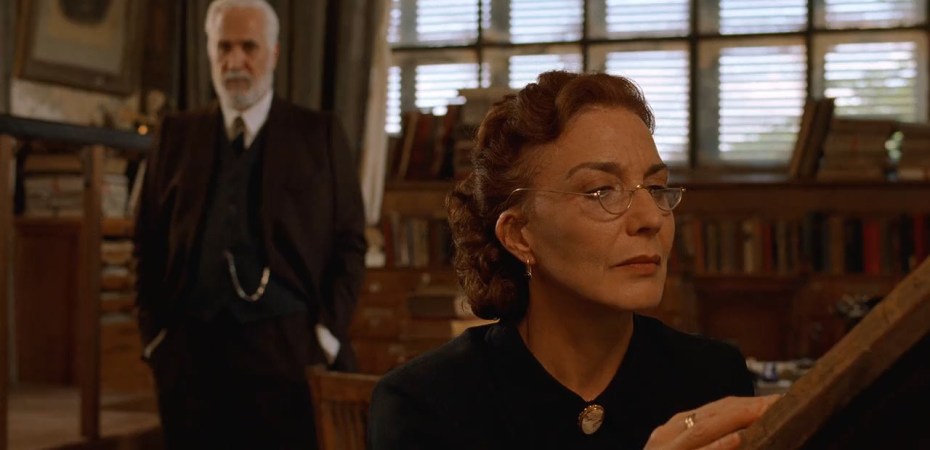
Written and directed by Guillermo del Toro, co-written by Antonio Trashorras and David Muñoz, Spain, 1939, in the last days of the Spanish Civil War, the young Carlos arrives at the Santa Lucía orphanage. There he will make friends and enemies as he follows the quiet footsteps of a mysterious presence eager for revenge. Starring: Marisa Paredes, Eduardo Noriega, Federico Luppi, Fernando Tielve, Íñigo Garcés, Irene Visedo, José Manuel Lorenzo, Francisco Maestre and Junio Valverde.
One of the many fantastic things about the filmography of the great Guillermo del Toro is that his style in every film is never exactly the same and yet you can always feel the continuity of his choices, because they’re so thoughtful, creative and born out of his unique blend of darkness and light. The Devil’s Backbone is a really great example of that because it strays away from his quintessential largess and opulence in favour of something grounded and understated. It’s a ghost story that’s not really a ghost story.
Within The Devil’s Backbone is a tale of abuse, trauma, poverty, conflict and resilience. Its ghost is a conduit to explore those themes and guide its leading young man through them. It was a fairly brilliant concept as it approaches those topics in such an accessible way, it doesn’t need to charge in, it can let them speak for themselves without handing you everything. The way that the writing moves has a patience to it, which is so well supported by those eerie and ominous tones. The balance that it creates is the key to why this film works, how it’s able to be relatively restrained while portraying a harshness, a cruelty and melancholy.
Of course, that’s only fully achieved when it’s matched with del Toro’s direction. Along with cinematographer, and frequent collaborator Guillermo Navarro, they create this aesthetic that feels drawn from a Western. It’s the perfect setting as the way that The Devil’s Backbone progresses feels entirely reminiscent of that genre of cinema. It’s gradual yet charged, there’s a smattering of violence, a lot of tension, and a big helping of resentment, with a strong dollop of difficult childhoods added in. It manages to give the feel of a much larger landscape, while taking place in such an isolated environment, helping to elevate that haunting atmosphere.
If that wasn’t enough, The Devil’s Backbone also then gifts viewers an excellent cast. The wonderful Marisa Paredes is unsurprisingly terrific here with a complex, conflicted and compelling performance. Fernando Tielve provides a perfect lead for this story in Carlos, he’s strong, considerate and empathetic. Eduardo Noriega’s Jacinto is forceful, broken and filled with aggression and greed. Federico Luppi’s Dr. Casares is sensitive yet highly logical, and definitely a big part of the sadness to this film. As is Íñigo Garcés’s Jaime, presenting the classic defensiveness of a child who has experienced loss and pain way beyond their years. It’s such a great blend of layered performances.
The Devil’s Backbone is an understated entry in the Guillermo del Toro library of the weird and wonderful. It’s patient and quietly stirring, the story is layered, and its ghost provides a perfect vehicle to not haunt the inhabitants but to reveal the larger haunting tale the film has to tell. There’s a terrifically grounded nature to del Toro’s directorial style, it has his creative touches but also a humble foundation. The cast are fantastic, it’s emotionally driven and it has aged exceptionally well, particularly with the new restoration work to accent that beautifully.
 FilmCarnage.com