
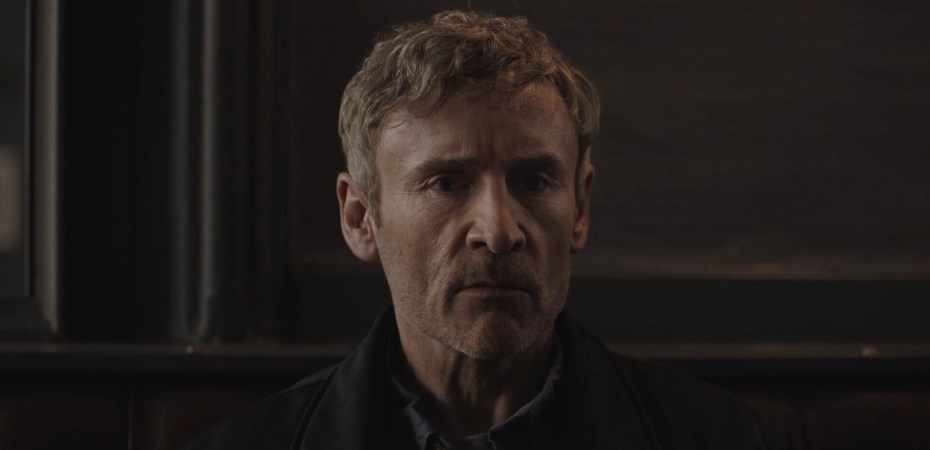
Directed by Jake Murray and written by Paul Ludden, IRA man Tommy McDaid is pulled back to Manchester 25 years after he helped plant a huge bomb that devastated the City Centre and changed the course of his life forever. Starring: Cal MacAninch, James Quinn, Trevor Dwyer-Lynch, Seumas Mackinnon and Liam Francis Collins.
While The Visit takes a little bit of time to get going, during that gradual opening it sets a strong, emotionally charged atmosphere. Especially with the help of its graceful, thoughtful score, that fills the air with sadness and regret. Subtle and understated are two key words when it comes to Jake Murray’s style with The Visit. Murray puts the focus on quiet reflection, he’s not going for shock and scandal, it’s instead a contemplation of the consequences of violent, hateful actions. All of which is supported by a sharp aesthetic, with some great cinematography from Jenni Suitiala.
The blend of past, present and archival footage of the real life incident is well balanced. It’s edited in such a way as to keep the focus on present day, and Tommy’s (Cal MacAninch) reflection upon his actions and the continuing trauma and grief. Framing it so that it portrays how hate and violence haunt us and can eat away at us. How the city may heal but the echo of those days still remains for those who were impacted by them.
There’s an inherent confidence in the way that Paul Ludden chose to approach this story. He doesn’t put a huge reliance on having the story overtly explain itself and include all the gory details. Especially in how those early scenes add a subtle note of how racial bias is still prevalent, even in those people trying to do better. It does ask you for a little bit more patience and observance, to put all of its pieces together. Additionally, it does feel like adding some additional context and expanding the plot slightly further, as it progresses quiet slowly, may have strengthened the story further.
It tends to sit in its scenes longer than necessary and the progression doesn’t feel effectively used in the final scenes. Time that could have potentially gone instead to investing more in the story. The ending is also fairly drawn out and the tone hits some unexpectedly conventional notes that feel more suited to action cinema. Particularly with the use of music, it doesn’t quite match the tone of the rest of The Visit and ends things on a somewhat strange note.
The Visit is a strongly pensive, contemplative short film. It chooses a different avenue to explore conflict, using the film as a rumination on the long-reaching arms of violence and hate, and the continued pain and regret decades later. Cal MacAninch gives a moving, understated performance which nicely matches the style of the film. Especially given he has few lines of dialogue to work with, he injects a great range of emotion. The direction is well done, as is the cinematography and editing. It’s an interesting story, and it’s surprising that incidents like this aren’t explored more frequently in UK film and television. Demonstrating the need to portray more strongly and openly, and continue to teach new generations about the devastating impact of The Troubles as a part of Irish and British history.
 FilmCarnage.com