
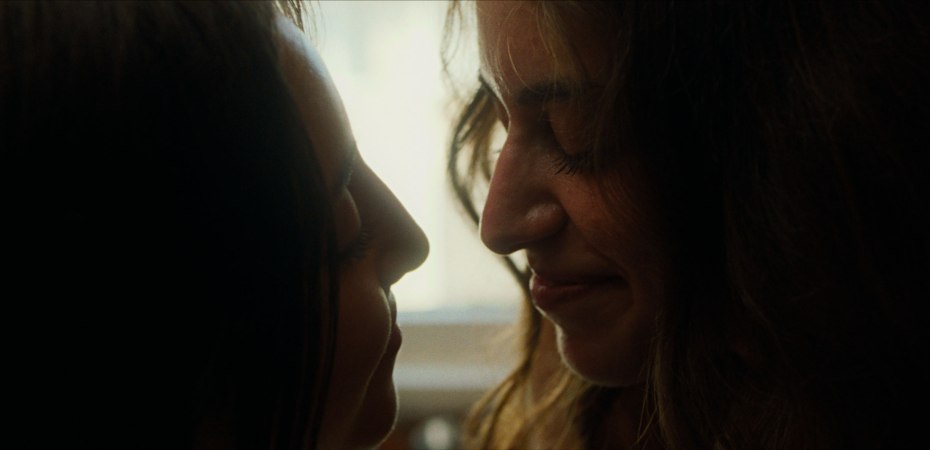
Written and directed by leading actress Naz Tokgöz, co-directed by Arantxa Ibarra, following Deniz, an enigmatic young woman who falls in love with a Turkish woman, Melisa and is drawn into the vibrant life of modern Turkey. Also starring: Yasemin Cem and Feryal Kilisli.
As you enter Krizalit, you’re greeted by its gentleness and strongly contemplative nature. The style that Naz Tokgöz and Arantxa Ibarra employ is clear from very early on in the short, it has a sensitive, emotional nature. As it moves forward you start to also feel the poetic stylings of it, there’s a performative edge that’s reminiscent of spoken word, as it engages an artistic side. Something that’s hugely befitting of its romantic story but that also allows it to build an atmosphere that has layers of sadness and foreboding.
The way that it moves is almost like drifting, but instead of feeling untethered, it’s a thoughtful choice to reflect the emotional and mental state of its leading character. As well as complementing its sensitivity and tenderness. Something that’s also very strong in the writing, it has a surprisingly soft edge, considering that it’s dealing with a harsh issue. It’s an interesting and unusual tact to take, many films exploring issues of persecution and societal prejudices tend to take on that anger and outrage, but Tokgoz and Ibarra focus on the frustration, anxiety, self-doubt, melancholy and fear.
Within Krizalit‘s sixteen-minutes, they manage to capture a lot of different themes, the struggle with identity and sexuality, the pressures of family and society, the fragility of new romance and the feeling of being an outsider, in many senses of the word. Considering how it has that gradual flow, it’s impressive that Tokgöz managed to fit so much into the script. Part of that strength being that a lot of it doesn’t need to be addressed directly but is still very much present. Something that’s well supported by the excellent editing work from Mete Gültiken (who also served as cinematographer), it really helps to ground the back and forth nature of the timeline.
Then comes Tokgöz’s third part to play in the film, of four as she also served as executive producer, which is firmly in front of the camera, guiding this story that she’s thoughtfully crafted. Her performance is filled with emotion, and it adds a lot of great tension to Krizalit. There’s a compellingly fractured edge to it, being madly in love opening up a lot of vulnerability, that’s then pitted against the prejudices and pressures which Deniz and Melisa (Yasemin Cem) face, it’s such a precarious yet euphoric position to be in. Cem does a great job of matching Tokgöz’s performance, with plenty of similarities but also plenty of differences. She brings that side of fear to the table, a hesitancy and strong youth, with Melisa taking a more realistic perspective, while Deniz takes the romantic.
With Krizalit, Naz Tokgöz and Arantxa Ibarra explore a poignant, relevant topic through a poetic, gentle lens. It’s an unexpected angle to approach this story from but one that was very well suited to match both the romantic and melancholy sides to its tale. The atmosphere has an artistic touch, while also being tense and endearing, particularly in its use of narration. There’s a strong score to embrace and elevate its emotional nature, something that comes through in full force in the final scenes. It’s filled with very tender performances, has a resounding sensitivity and impressively finds a way to tell this harsh story not with a hammer but with a light touch.
 FilmCarnage.com