
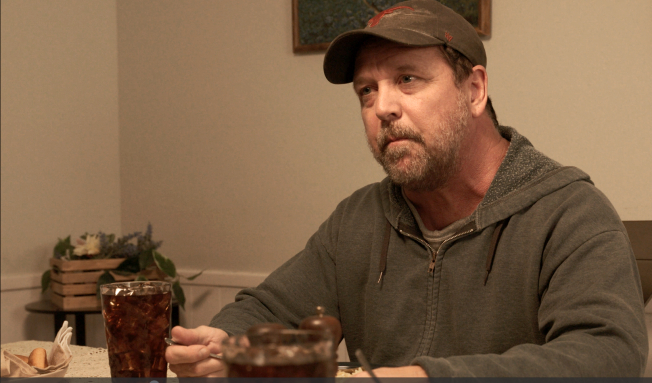
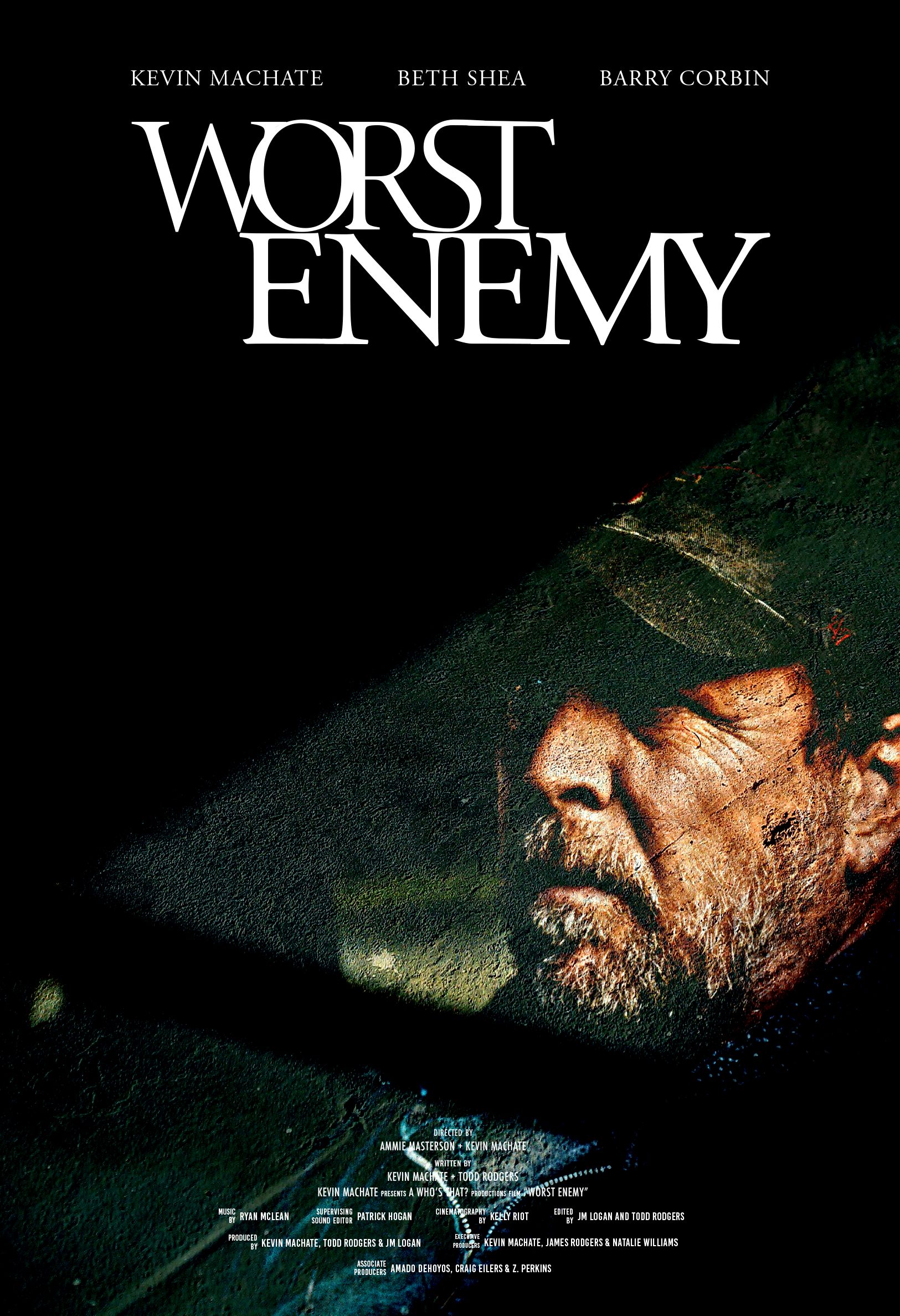
Directed by Ammie Masterson and leading actor Kevin Machate, and written by Kevin Machate and Todd Rodgers. After receiving a devastating diagnosis, a severely depressed veteran who hides his pain through self-isolation and alcohol must accept the help of his famous cousin or risk becoming just another statistic. Also starring: Beth Shea, Barry Corbin, Ammie Masterson and Gayland Williams.
Ammie Masterson and Kevin Machate start things off on strong footing, using obscured shots to establish tension and appeal to your curiosity. It quickly creates a strong atmosphere, something that Masterson and Machate then consistently build upon all throughout Worst Enemy. One of the helpful factors in achieving that is the score from Ryan McLean, it has a great range of pulling back in quieter moments but going nicely dramatic in others, boosting the emotions of the film.
The aesthetic is similarly as strong, it’s really capturing that everyday reality but not limited by it, elevating it slightly with great clarity and humble colours. That’s then supported by some excellent editing work from Josh Logan. It adds a helpful movement which supports the pacing and progression of Worst Enemy, both of which are well done to allow the film to sit quietly in its moments while never feeling slow or drawn out. It keeps a forward momentum, without having to overstuff its plot.
The plot is really where the heart of Worst Enemy lies because it’s handling such a sensitive, poignant and important topic. Mental health, trauma and illness need to be continually discussed and portrayed in film and television, to aid in ridding society of old-fashioned, harmful attitudes. As well as to help provide and encourage environments, particularly for men, in where people can feel comfortable talking about these issues, and to seek help.
That’s something Machate and Rodgers do well to capture with the script, how your environment impacts your mental health and how you handle conditions such as borderline personality disorder, which they explore with this short film. How Machate and Rodgers capture that is of particular importance because they keep the tone of their writing extremely grounded and earnest. They put the focus on capturing that everyday reality, much in the same way that the filmmakers do with their direction. It’s natural and easily believable, which is exactly why they manage to build a big note of sincerity. Without that, Worst Enemy wouldn’t work as well as it does, it’s having that organic feel that drives home the story.
Being able to hit the right emotional notes is something that’s undoubtedly also made possible by quality of the performances, particularly from Machate and Beth Shea. Machate does a wonderful job of capturing the many sides to mental illness and struggle. One really terrific element is how he portrays the awareness of Shane, stereotypical performances will tend to make it seem like the characters aren’t fully aware of the depth of their own struggle. Whereas Machate clearly shows that some people like Shane can be aware that they need help, they can take active steps, they can talk to others but that doesn’t mean they aren’t still intensely vulnerable and at risk. That mix of vulnerability, strength and pain is delivered in a nicely understated style from Machate.
Shea then makes a superb partner for Machate, she provides a very kind, empathetic presence. The two have a great connection, sparking a little bit of banter but a lot of reassurance and support. That support is such a key element when dealing with mental health and Worst Enemy provides a very realistic example that while people want to be there and help as much as possible, they also have their own lives and can’t be available twenty-four-seven. Barry Corbin was another great addition to represent the complete opposite, the negative influences, the people who don’t take mental health seriously and are a harmful presence. Corbin is utterly reliable to bring that sort of old-boy persona to the table, the classic ‘suck it up and be a man’ mentality.
Worst Enemy is a moving, earnest, thoughtful exploration of mental health and borderline personality disorder. It’s well shot with great location choices, it’s respectful of the topic and creates a compelling, tense, melancholy atmosphere. The performances are terrific from the whole ensemble, but Kevin Machate really brings it all together with such a heartfelt, honest portrayal. It does get a touch sentimental in its final moments but outside of that, it has a fantastic sincerity and it’s great to see the short highlighting such a vital topic. Particularly the commonness of undiagnosed mental conditions and how many learn of them later in life, and struggle to come to terms with it.
Verdict: ✯✯✯✯ | 8/10
 FilmCarnage.com