
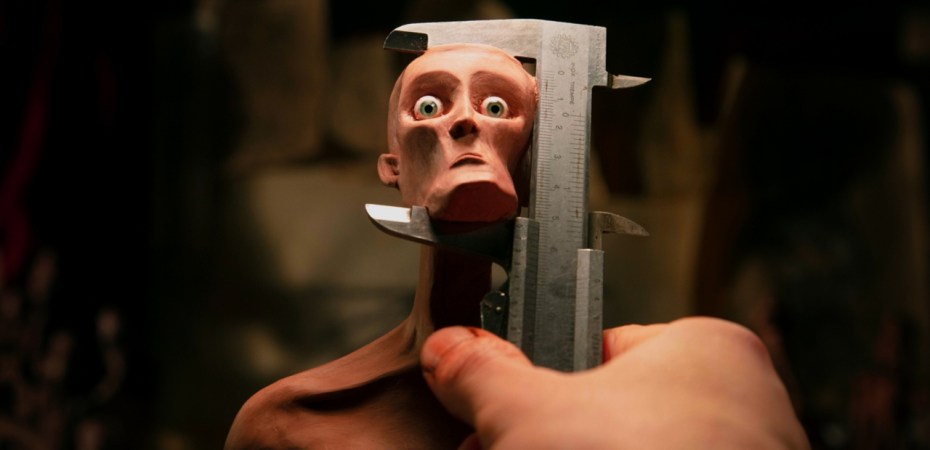
Written and directed by Matteo Burani, co-written by Gianmarco Valentino, fragile clay Sculptures come to life in a bare workshop, craving more than just existence. When their Sculptor abandons them, they must discover the power of belonging.
Stop-motion is an impressive art form to begin with but the way that Matteo Burani uses it in Playing God is just ridiculously impressive. He makes it visceral and entirely changes the perspective and interpretation of stop-motion. The detail is incredible and the way that he uses emotion is unique. It feels like a homage to Ray Harryhausen told through body horror, it’s such an original creation.
The cinematography (by Guglielmo Trautvetter) is fantastic, the richness and sharpness of the visual is beyond captivating. The tone and atmosphere that Burani sets is brilliant, it’s twisted, creepy and Frankenstein-esque, making for such a perfect combination. It’s genuinely gripping to watch unfold, especially as it’s paired with such a powerful, effective score from Pier Danio Forni.
You’ve then got what seems like a simple story, but it’s immaculately layered. Burani and Gianmarco Valentino create something that has endless metaphors. You could easily interpret Playing God to be about breaking beyond your own barriers or roles that the world has set for you. As easily as you could interpret it to be about capitalism or authoritarianism, there are so many that fit the tale of the puppet master and his creation. It’s entirely open, as there’s no dialogue, which surprisingly makes it even more compelling.
Playing God is an exceptionally well crafted piece of stop-motion. The detail is unbelievable and the tone that Matteo Burani sets is enthralling. It has such a remarkably visceral and twisted nature that feels utterly unique. The writing is simple yet complex, the cinematography is fantastic, the score is excellent. The entire short is simply an incredibly impressive achievement.
 FilmCarnage.com