
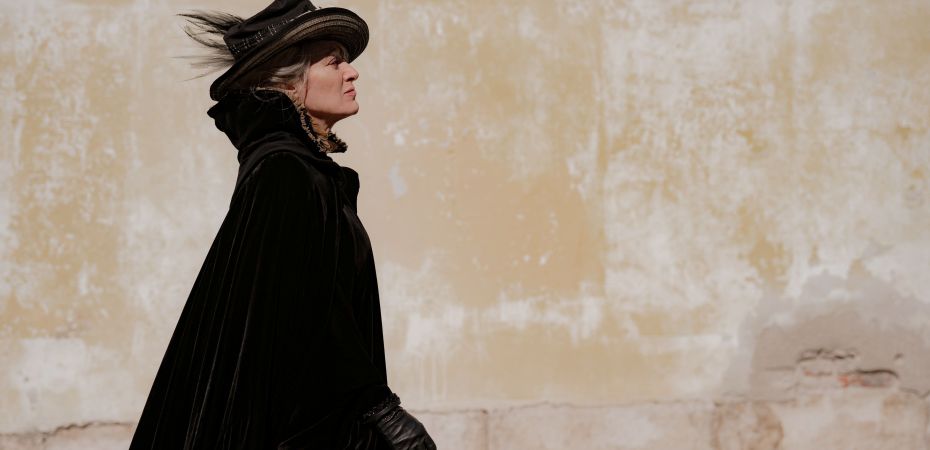
Written and directed by Pietro Marcello, co-written by Letizia Russo and Guido Silei, after retiring from her legendary stage career, actress Eleonora Duse feels an irresistible call to return to the theatre during Italy’s turbulent period between WWI and the rise of fascism. Starring: Valeria Bruni Tedeschi, Fanni Wrochna, Noémie Merlant, Fausto Russo Alesi, Edoardo Sorgente, Vincenzo Nemolato and Gaja Masciale.
If you were to approach Duse as purely a vehicle to showcase the talents of Valeria Bruni Tedeschi, it does its job very well. Tedeschi gives a fantastic performance, she’s the key strength of the entire film. There’s such a terrific emotional range, on top of bringing through those classical acting notes. She portrays a lot of vulnerability in Eleonora, there’s such a compelling brokenness and desperate desire for the heights of success of her past. She’s also surrounded by a wonderful ensemble, particularly Noémie Merlant who has so much to offer here but isn’t quite given the time. The fractured relationship between her and her mother laid the seeds for some interesting conflict but it feels sidelined.
It’s the sort of issue that would have been relatable and sympathetic to explore, something which Duse could have definitely benefited from. The problem is the mix of different themes which the film is exploring are all rather heady. That mix of historical politics, war, power struggles and classical theatre, is not the most palatable. It has a great presence, Pietro Marcello undoubtedly captures the weight to this story, with a compelling atmosphere but the plot itself doesn’t give you enough to invest in. It leaves you wanting and is lacking in power.
However, visually Duse is hitting more confident, resounding notes. Marcello captures the opulence of it, as well of the nature of theatre to be at one moment a height of fame and luxury, then at another struck by struggle and poverty. As well as touching upon the influence of the government on both funding and content, something that remains ever relevant. The costume work is excellent, something that’s always an invaluable element to really boost the atmosphere of any period drama. The cinematography (by Marco Graziaplena) is strong work, keeping a slightly darker, richer palette to the reflect the time, with a superb amount of detail and a striking quality.
Duse feels intensely weighed down by the heft of its subject matter, getting its feet tangled in politics while Valeria Bruni Tedeschi tries to free it with her excellent performance. While its themes do relate to today’s world, mixing them with classical theatre, especially that of Greek tragedies and epic works, made it sluggish and struggle to draw you in. It’s shot well and has a strong foundation, but the story doesn’t feel as though it gets very far, moves very slowly, and there’s nowhere near enough Noémie Merlant.
 FilmCarnage.com