
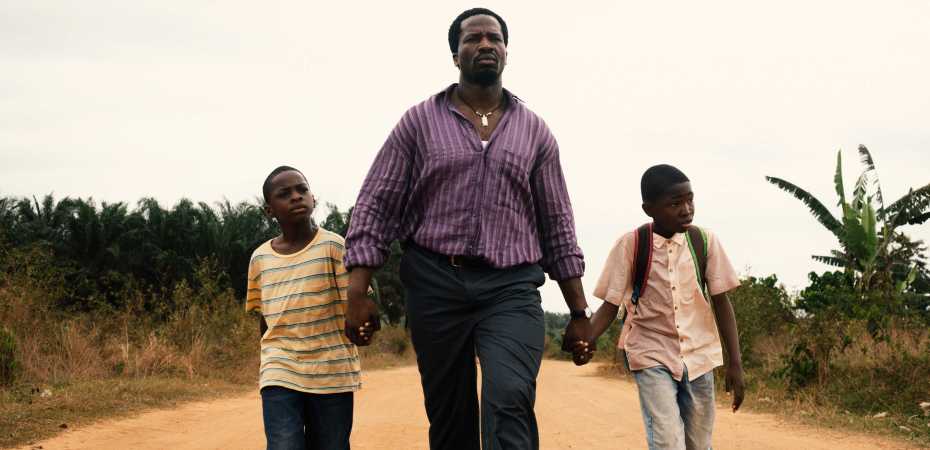
Written and directed by Akinola Davies Jr., co-written by Wale Davies, kid brothers Remi and Akin get to spend a gift of a day with their estranged father Folarin. They go on a voyage into Lagos observing the colossal city for the first time and the hoops their father must deal with to provide. All this happens in the backdrop of a huge 1993 presidential election result which calls into question his ability to get them home. Starring: Ṣọpẹ́ Dìrísù, Efon Wini, Godwin Egbo, Chibuike Marvellous Egbo, Tosin Adeyemi, Adesina McCoy Babalola, Lawrence Chu and Patrick Diabuah.
One of the strengths of My Father’s Shadow, which makes itself known very quickly, is the use of sound (designed by Chad Orororo). This is a film of layers and subtleties and Orororo is able to employ sound in a way that adds clever foreshadowing and deepens the emotions tied with its complex themes. It’s one of the key pillars to My Father’s Shadow’s success and impact. Particularly in how it allows Akinola Davies Jr. to create such a well-rounded and affecting balance between this touching family story and the trauma and oppression which lies beneath.
That is arguably the biggest display of talent on offer, tied with the performances, the way that Davies has chosen to explore such deep rooted trauma and struggle through something so tender as the relationship between father and son. Particularly because there’s so much focus on the psychological rather than the physical events. The filmmakers don’t cheapen things by handing you the past on a platter, they let you infer the heavy weight that lies upon Folarin (Ṣọpẹ́ Dìrísù). That’s not to say it’s obscure in any way, they easily guide you to all the information you need.
Another impressive element of Davies’ debut feature is the tone and atmosphere, My Father’s Shadow has such a compelling emotional depth. One that’s paired with a quietly haunting quality which stalks the film throughout. He also manages to bring you the majority of this experience from the perspective of the children which makes it even more accessible. Really letting audiences be awash with that psyche of hardship, trauma and a feeling of powerlessness or hope moving beyond their reach, without needing anything truly bleak or violent.
That perspective is one that’s superbly brought to life by the young actors playing Folarin’s sons, Godwin Egbo and Chibuike Marvellous Egbo. They so keenly follow Ṣọpẹ́ Dìrísù’s example, an actor whose so fantastic at adding complexity and presence. They give impressive performances, full of both complicated emotion and childlike wonder and frustration. The three of them create the heart of My Father’s Shadow, one that is poignant, touching and layered. They’re a truly excellent trio and they draw you in so easily to this story, creating wonderful, well-rounded characters.
The only sticking factor for some viewers may be the choice of ending. Akinola Davies Jr. and Wale Davies do take risks with how they resolve this story, it’s weighty and somewhat opaque. It doesn’t draw a crystal clear line under everything that has happened and so may dull the emotional experience for some. At the same time, it does add a strong final note to the themes explored throughout, and a very emotional one.
My Father’s Shadow is a confident, complicated and courageous first feature from Akinola Davies Jr.. To delve into these political, violent and intense issues through the eyes of children and family relationships is an unusual concept but it was extremely well thought out. Davies delivers this story with a deep sincerity and grace. One that is portrayed perfectly by its leading trio and supported excellently by the direction, editing, sound and terrific cinematography from Jermaine Canute Edwards.
 FilmCarnage.com