

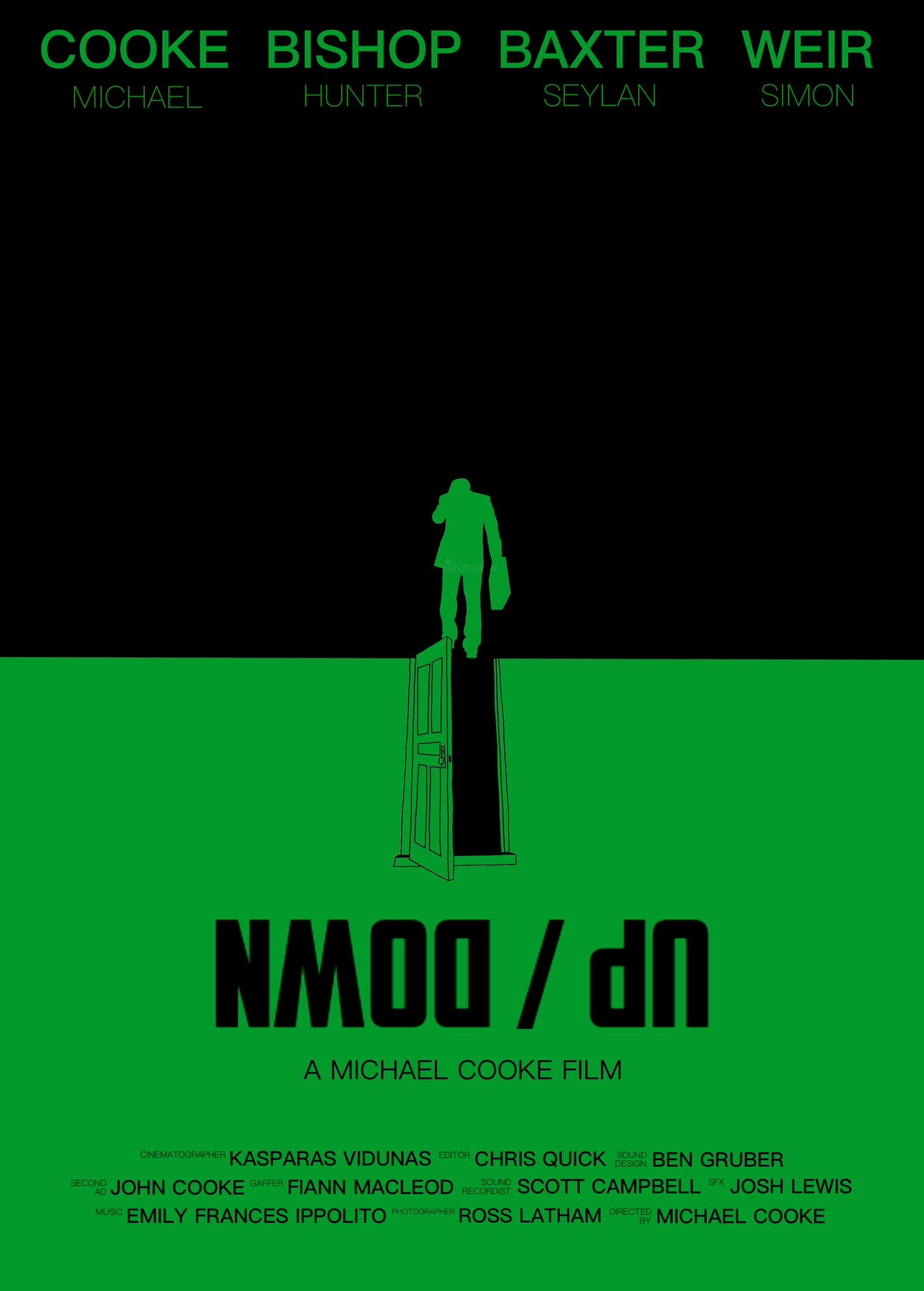
Written and directed by leading actor Michael Cooke, when the jury’s out, which way will the pendulum swing? Life moves too fast. Will you let it slip away? Also starring: Hunter Bishop, Seylan Baxter, David Forrest and Simon Weir.
The idea of what comes after death and how we will be judged is something that’s been explored a lot in cinema but more often than not the question lays upon the goodness of our actions. It’s that quintessential balance of good and evil, how our actions have impacted the lives of others but interestingly, Michael Cooke turns things inwards in a slightly different manner. Bringing through the question of how did you enjoy your life? Did you appreciate your time on earth and what were the real intentions behind your actions? It’s a nice change of pace and feels extremely relevant in today’s world where we’re so often dragged down by the intense negativity of world events, that we forget to appreciate the little things, enjoy ourselves and focus on caring for one another. As well as how in the age of social media, there are so many more examples of good actions being rooted in selfish gain.
Within that realm is a lot of complicated emotions, which is what makes it another interesting choice of Cooke’s to not rely on dialogue for a good portion of Up/Down. It’s also a clever choice because he’s putting a lot of confidence and trust in his own performance, and rightly so. His performance in the early half of the short relies upon his facial expressions and he strongly communicates a lot of fear, confusion, self-doubt, curiosity, loss and vulnerability. It adds a good note of chaos to what is otherwise fairly slow and quiet. He builds a relatable, sympathetic character who draws you in easily to this story.
Cooke then opens that up as he introduces Hunter Bishop’s character, who has a big note of bureaucracy that makes him feel like an afterlife agent or broker. There’s a classic job interview quality to their interaction which works surprisingly well. Bishop’s performance also completely contrasts Cooke’s, bringing a wired and excited energy. It was a great choice to add some volatility to the mix and scramble Cooke’s character, even more than he already is.
The other element Cooke is putting a lot of trust in is the visual of Up/Down and the quality is there to back him up. Especially in how Cooke, alongside cinematographer Kasparas Vidunas, use colour to accent the changes to the atmosphere and to John’s (Cooke) mental state. It adds a neon-like edge to the aesthetic which has a lovely richness and creates a strong contrast to put the focus directly on the character. The sound work and score (by Emily Frances Ippolito) definitely also help to push that focus, keeping things satisfyingly clean and simple, not intruding or overwhelming the scenes. As well as the editing from Chris Quick, bringing through some movement, leaning into the confusion and anxiety, but not trying to speed things up.
Although the speed is something that isn’t always at the right level with Up/Down, it does take a bit too much time to settle in. It can feel slightly hesitant in its opening, which when considering there isn’t a great deal of progression within the story itself, it’s not the most effective use of its time. It can feel slightly drawn out, that it had the space to add a bit more detail to its story, and intensify the emotions further. However, there are a lot of great choices to keep the sets simple and effective, it’s a good location that doesn’t require a lot of decoration, which feels nicely budget conscious. Something that’s always key to any indie filmmaker but particularly with short film and when done poorly, can throw off the whole aesthetic and atmosphere.
Up/Down is another entertaining short from Michael Cooke, this time serving as a reminder of how often we forget to appreciate what we have, while we have it. Cooke’s direction and performance are thoughtful, the cinematography is strong, and the use of colour is particularly well done to add layers to the atmosphere. There are elements to the story which could have been further explored, and it perhaps could have dived in more fervently to get things going but there are a lot of clever choices. It impressively entirely avoids becoming sentimental and holds a strong focus.
Verdict: ✯✯✯½ | 7/10
 FilmCarnage.com