
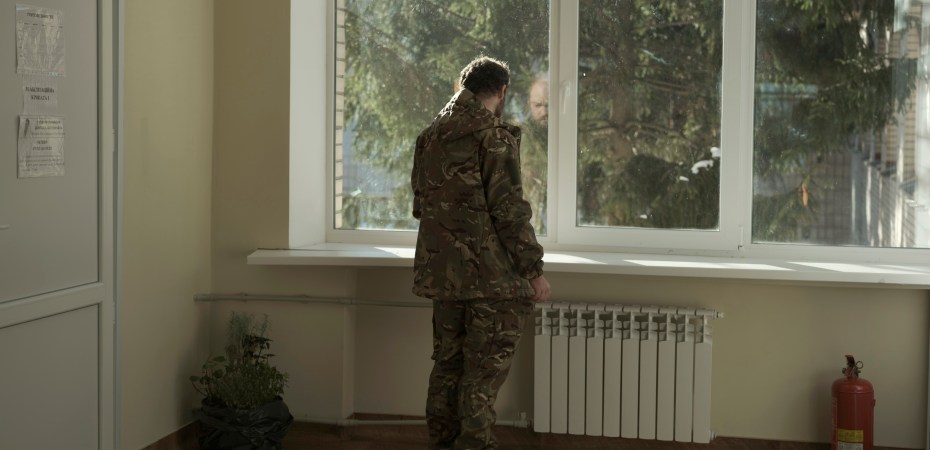
Directed by Marcus Lenz and Mila Teshaieva, war crimes haunt the residents of Bucha, years after Russian occupation. And yet, among the bodies and rubble, they band together with a determination to carry on. Children rehearse school plays, widows rebuild their houses and couples begin married life even as soldiers return to the front – perhaps never to return. Nothing can prepare people for life in a society shaped by war and, as time marches on, fissures in communities become increasingly evident.
Sadly, the impact of war is seemingly never going to not be a relevant topic and people forever need reminders of the long-lasting consequences on everyday life, as well as the pain and grief. As Shards of Light opens, Marcus Lenz and Mila Teshaieva immediately set an atmosphere of loss and trauma, you can feel the weight that these stories have to tell, before they even begin. Visually and tonally, Lenz and Teshaieva do a great job of communicating the issues at hand and their importance. Especially as they choose such a natural style, they’re not trying extra hard to push the outrage or suffering, it’s simply capturing the daily life of their subjects.
Each of the stories provides a different perspective on the experience and they’re worth telling but the way that they’re edited together doesn’t do them justice. It’s compelling to see how each citizen has been impacted but the progression feels as though it’s jumping around randomly. Unfortunately, though they each have their value, but they don’t feel like a good blend together. That issue restricts Shards of Light from flowing in a way that it can build upon itself and drive home the emotions of their stories.
After a while, it even feels like it’s hitting a surprisedly reserved note, that there is so much emotion, but it doesn’t break through. That’s then hindered further by the sense that none of these stories have any sort of resolution, we’re seeing the continuation of their problems and there’s still a lot of roads to travel. It’s a tricky mix as it’s great to see it from that everyday perspective but at the same time, it lacks power.
Shards of Light has a great tone and vision, but the execution misses the mark. There are some good stories to tell with valuable themes and poignancy, but it doesn’t feel as though they work together. Ultimately, it becomes a jumble of different perspectives rather than having them build upon one another to empower the message and emotions of the film. The intentions are definitely there, and it was a good idea to really drive home the everyday existence but it simply doesn’t come together effectively.
 FilmCarnage.com