
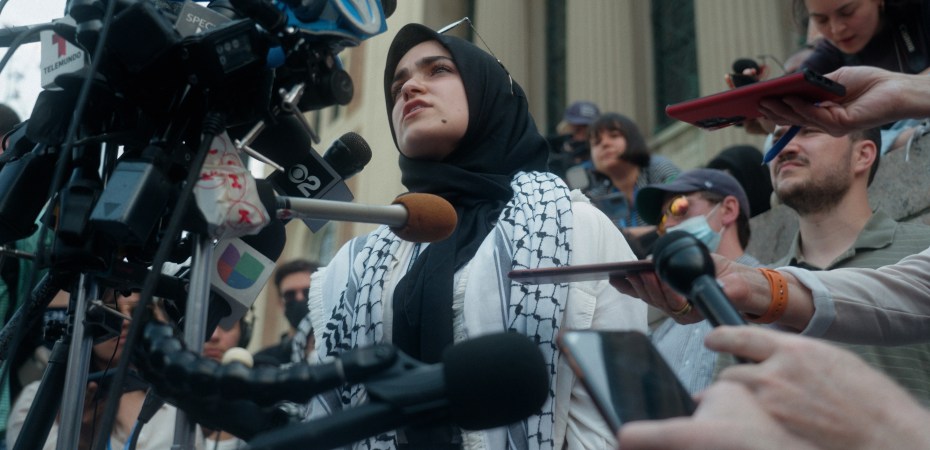
Directed by Kei Pritsker and Michael T Workman, students flooded Columbia University’s lawn to create the Gaza Solidarity Encampment in order to pressure their university to divest from the US and Israeli weapons companies.
With the reasons for protest in the US growing rapidly, and the ongoing conflict in Gaza, The Encampments couldn’t feel more timely. There’s a lot to dissect within this documentary but something that stands out particularly is how young people in protests are infantilized, patronized and the endless attempts to undermine their intelligence. It’s repeated all throughout by various different opposition that these young people are supposedly sheep who have been indoctrinated by some information they happened to see online. They equate the access to such a wealth of information as a weakness that will mislead them, rather than it allowing them to see the conflict in real time and inform their own perspectives.
It’s fascinating how that argument is so often used with protesters to undermine their viewpoint, when it should be used in the very relevant cases of misogyny, racism and other hateful content that leads vulnerable young minds astray to commit violent acts, not protest. You then have the entirely hypocritical attitude that colleges clearly want their students to be passionate, outspoken people, and even provide spaces to protest, but revoke that attitude once it causes a problem with funding or public image. As well as portraying how those institutions will adjust the rules, consequences and employ excessive methods when they’re trying to pressure the students into doing what they want.
Undoubtedly Kei Pritsker and Michael T Workman capture the fervour and dedication of those students of Columbia with The Encampments. Although, it feels like their reason for such passionate protest doesn’t get enough consideration. There could have been a better balance of exploring the situation in Gaza, particularly that of October 7th, alongside the actions of the students. As there are a number of moments where it can feel as though the documentary is going over similar ground. However, they do a wonderful job of depicting the power of protest, particularly in the social media age, how it can spread awareness, inspire others and effect change.
The Encampments demonstrates the rousing dedication and commitment of the students who flooded Columbia University’s lawn. Pritsker and Workman capture the necessity and power of such actions to keep the world’s eyes on suffering citizens and vital issues. It potentially could have spent a little more time exploring the conflict and the students’ reasons for protesting but they do nevertheless instil the sheer pain and violence that is being inflicted.
 FilmCarnage.com