
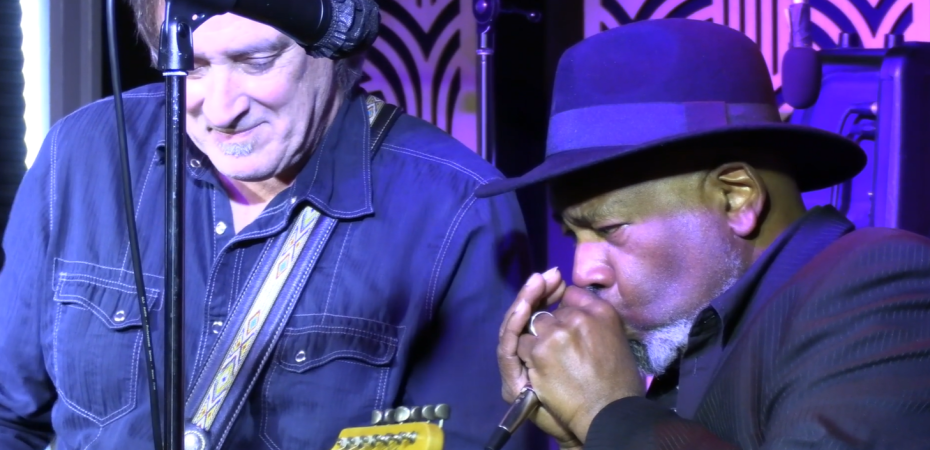
Directed by Jill Frechie, discover the Blues at Jamey’s House of Music with candid interviews and music vignettes about a local blues club highlighting the Philadelphia slave connection with a singer-harmonica player and historian.
The blues is simply one of those topics that you can practically never run out of things to talk about, the history, the culture, the emotional layers to the music, it goes on and on. That quickly creates both an advantage and a disadvantage when it comes to exploring the genre within short film. It gives Jamey and the Blues plenty to celebrate and honour, but there’s only so much that you can fit into fifteen minutes. Therein lies the key issue that the film faces, there’s just too much ground to cover. There isn’t time to both pay homage to the club, and explore the evolution of the blues.
Keeping to the local history and diving into the specific creation of the club is where Jamey and the Blues is at its strongest. Jill Frechie creates this loving tone which has multiple facets, it’s the love of the club, the love it has instilled in others, the love of the genre and more. Most people are likely aware of the background of the blues, how it has been deeply involved in the Black experience in America for its entirety, particularly with the Underground Railroad, so to traverse over that feels unnecessary.
Instead moving back and forth between the artists explaining how they came to love the blues and seeing them perform works really well. Frechie creates a good balance between the two, and it has a strongly natural, authentic and unfiltered style. However, the style can also be overly simplistic at times, particularly with the quality of the aesthetic. It’s basic and lacking in depth or clarity, some of the angles can feel slightly ungraceful. It has an old-fashioned touch so while it works, it doesn’t fully embrace the energy of its subjects and topic.
Jamey and the Blues has the loveliest of intentions but is rough around the edges. The style needed a boost to its definition and movement, it comes across as extremely simple. It also tries to cover an incredibly broad view of the topic but sadly, there isn’t time to do justice to that conversation. It’s at its strongest when it focuses on the people, their experience and how the club came to exist. Nonetheless, it’s always great to see heritage and elder artists, who typically go underappreciated, getting a little bit of the limelight.
 FilmCarnage.com