
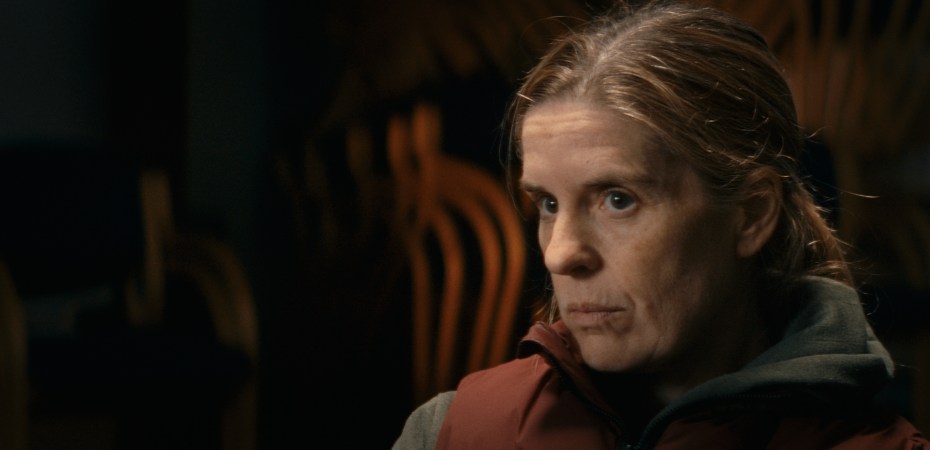
Directed by Iain Cash and written by Michael Farrell, A disparate group of addicts find common ground as they explore their inner demons. Starring: Martin Green, Victoria Latham-Kelly, Nathan Wedge and Valerie Bundy.
One element of filmmaking which can be frequently underappreciated is lighting but it plays a key role, particularly in indie short film. The difference that it makes to the visual can change the entire tone if you’re shooting in a single, intentionally drab setting, and The Circle is a very good example. Iain Cash, alongside cinematographer Adrian O’Toole, elevate their mundane setting. Rather than keeping things overly simple, as is often the case, they thoughtfully create texture and contrast. Those choices help viewers to immediately lock in and add an air of sincerity.
Similar could be said for Victoria Latham-Kelly’s performance, she has a strong, compelling presence. She helps to give The Circle a grounded quality and expands the tone into interesting territory. However, Martin Green and Nathan Wedge’s characters hit overt comedy notes which don’t work smoothly opposite that genuine side. Green’s delivery feels reminiscent of a television presenter, he has a bit of Dale Winton energy, while Wedge hits some classic lad notes. So, while there’s nothing wrong with their performances, they unfortunately clash with the overall atmosphere.
By the time The Circle reaches its end, it feels like the script wasn’t quite sure what it wanted to achieve. Michael Farrell built a tangible connection between these characters and brings up some relevant psychological behaviours but then falls back on the comedy notes which undermines the film’s dramatic side. It creates a mishmash of tones which don’t find a satisfying blend. It’s a shame as the themes are there and the pacing is great.
The Circle is shot extremely well, the direction is thoughtful and puts a heavy emphasis on the quality of the aesthetic, which is great to see. Victoria Latham-Kelly gives a fantastic performance with a surprising depth and perceptiveness. The concept absolutely works but the delivery feels misguided, it gets tangled up in comedy and ends up feeling like it’s trying to deliver a twist or gotcha moment rather than make a genuine statement. There was a bigger potential and the ingredients to explore mental health, but ultimately it doesn’t quite live up to that.
 FilmCarnage.com