
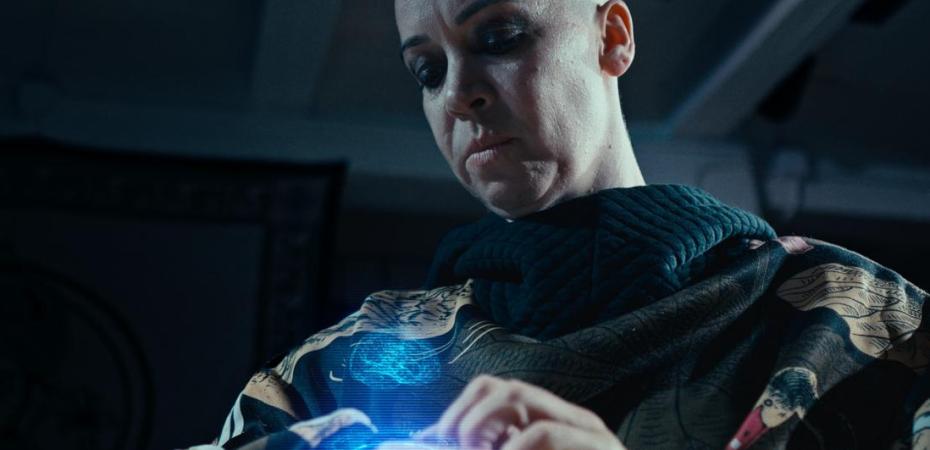
Directed by Sebastian C. Santisteban and written by Gian Bonacchi, Neal Ludevig, Sergio Sanchez and Daniel Moreno Skurve. In a society enslaved by a neural chip erasing emotions, F.1, a government scientist confronts an ethical dilemma when her last test subject defies the chip’s effects, forcing her to confront the consequences of her research. Starring: Cindy Claes, Monika Valkunaite, Toro Cuenca, Neal Ludevig, Philip Philip Kilgour, Carla Pueyo, Scarlett Sidera Rourich and Ankur Singh.
All Dogs Go to Heaven opens on a very strong note, the visual is smartly constructed to bring through that futuristic feel while being budget conscious, not overstretching itself. It has a mix of slight coldness and an artistic edge, one that’s reminiscent of films like The Square, holding a stylish nature with an air of mystery and vague threat. The opening in particular does a superb job of capturing that corporate quality, both through the direction and the intentionally robotic nature to the performances. As well as including a nicely designed logo to really sell that domineering corporation feel.
Something else that immediately stands out is the quality of the audio. The importance of audio is frequently underestimated, but it can have an even bigger impact with short film. All Dogs Go to Heaven is a good example of how having that crisp, clean quality to the dialogue elevates it. It’s hard not to feel the influence of Blade Runner as the film dips into the idea of ‘being’ and what it really means. However, bringing up the question of how quickly people might be to give up their humanity in order to remove pain and suffering feels very relevant.
There’s something to that story which gives it a historic edge, the feeling of it being a small part of a bigger picture, helping to lend weight to the tone. A tone which is then complimented by some strong score work. As well as having a robust voice leading the way, boosting the film’s presence. The performances also follow that style of being conscious of limitations, they never try to overplay their hand. The cast bring a calculated tone to match the futuristic setting yet they’re not entirely cold, with leading actress Cindy Claes creating a great balance of concise choices while holding onto the hint of a personal touch.
It moves strongly for the most part but starts to struggle as it approaches the final couple of minutes. Cutting in the footage of memories doesn’t have the same quality and slightly takes away from the atmosphere. It feels like they could have been more fractured, with faster editing, as their intention is clear, and they only needed to be brief.
Something that’s then impacted further by the switching of tones in the final moments. The drastic changes are tricky to pull off within such a short period of time and they might leave people confused as to what the final message actually is. Especially having the remnants of the dialogue appearing over the credits, the audience’s attention may have been lost, so it can lessen the impact. There’s a lot being attempted to fit in those brief moments, so it feels as though it needed to give itself a bit more space to breathe and process the events for them to land more effectively.
All Dogs Go to Heaven hits a lot of strong notes through the direction, cinematography, score, writing and performances but is slightly let down by its ending. It moves with such a great confidence earlier on but as it approaches the ending, things feel rushed. However, outside of that, its visual is well thought out, it has a compelling presence and a surprisingly relevant story. The filmmakers do an excellent job of building that dystopian edge while never overplaying their hand. Something that deserves a decent amount of credit as after so many iterations, it’s not an easy thing to do convincingly within an indie budget.
 FilmCarnage.com