
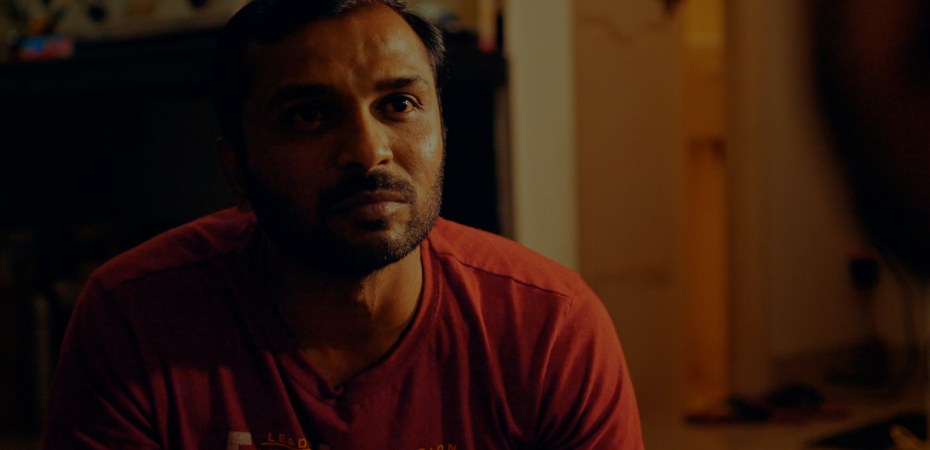
Written and directed by Saurabh Doke, Siddharth arrives (Doke) in the city with a burning determination to uncover the fate of his beloved brother, Pradip. Pradip, hailing from a Dalit family, had always been an advocate for goodness and kindness, which unfortunately made him an easy target for the cruelty of the upper-caste individuals in the city. Also starring: Swapnil Badnale, Ashish Bisht, Ashwani Kumar Jadhav, Aditya, Sandesh Mantri, Karan Deshmukh and Dhanshree Jamkar.
Timing is always a factor in film but even more so when it’s short film, and that can go either way of trying to do too much with too little or doing too little with too much. Milk, Rice and the Blood feels like the latter, coming in at forty-five minutes, it’s pushing the boundary on becoming a feature, albeit a brief one, while the plot isn’t enough to keep things going. The problem is, the longer it extends itself, the more apparent its intentions become, so by the time it does arrive at the finale, there’s nothing left to reveal.
It’s a shame as the story itself works well, using a thriller foundation to explore classism, capitalism and greed. It’s familiar yet the culturally specific nature to the plot sets it enough apart from the crowd. There are a few choices that feel coarse, Milk, Rice and the Blood doesn’t quite have the darkness to pull off the heavier notes it attempts but they’re definitely in the minority. Similarly, while the non-linear choice of progression works, in the earlier scenes it can feel heavy-handed, though it finds smoother ground as time goes on.
Part of that is how the score is used, early on it can come in loud and brash, hitting a highly dramatic note, that the film hasn’t yet had the time to build a tone to match. The sound work is also a little rocky throughout, the dialogue isn’t always mixed well and some of the sound effects miss the mark.
However, with the exception of extending scenes unnecessarily, needing a less generous edit, the direction is solid throughout. Saurabh Doke does a good job of mixing up the shots, picking less conventional angles and feeding into the tension. Doke captures that atmosphere of angst and resentment well, to portray the exasperation with a discriminatory and unjust society. Even if the plot isn’t quite enough to fill the runtime, Doke does manage to keep that tense air going, both through his direction and performance.
One of the best choices that Doke makes is keeping his performance understated until the very last minute. Bringing a level-headed and calculated quality to Siddharthwas a smart move. It would have been easy to make him into a crazed, manic presence and it wouldn’t have worked. The same way that Milk, Rice and the Blood’s thuggish characters can be over the top with the stereotypical aggression and cruelty, but it is fitting to their personalities. Whereas Swapnil Badnale evens out the tone with a sweet, kind and slightly naïve character who nicely leads viewers into this story.
Milk, Rice and the Blood adds a new spin to a familiar story, mixing layers of relevant societal issues into a classic tale of vengeance. The story is captivating, the direction is tense and cleverly doesn’t try to over-stylise itself as many others do these days, it simply needed to cut down its runtime. Having that rather self-indulgent length means that the plot becomes transparent, when it might have kept itself more hidden and satisfying with a sharper pacing.
 FilmCarnage.com