
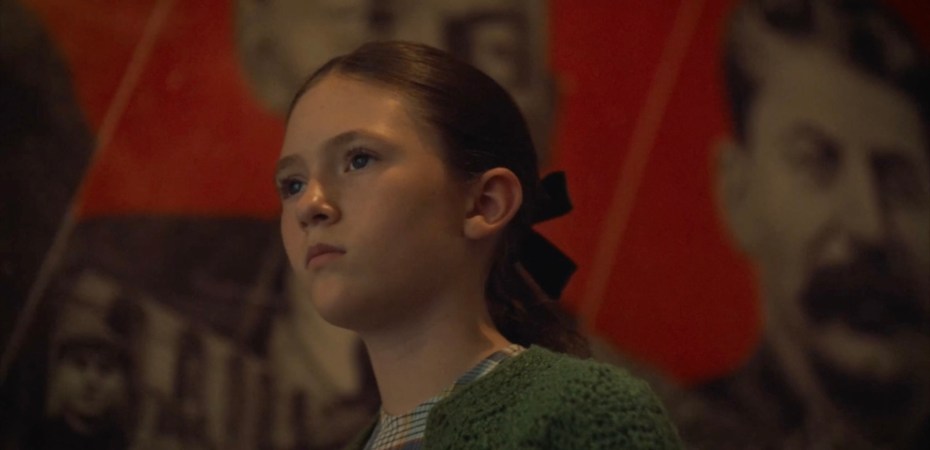
Written and directed by W. Y. Geng, following the tragedies of Joseph Stalin’s Soviet regime, which ignored scientific facts on genetics, resulting in the mass starvation of millions of its citizens. A regime which persecuted over 3,000 biologists who stood up for scientific truth. Starring: Virginia Shannon, Charlotte Raith, Dove Meir, Jordan Liebowitz, Jenna Reilly, Robyn Lynne Norris, Shannon O’Boyle and Berry Newkirk.
It would be impossible, and more than likely soul-destroying, to be aware of every atrocity committed throughout modern existence, but that doesn’t mean we shouldn’t still learn as much as we can. While Stalin’s regime is one that most people will have some knowledge of, The Seed of Truth touches upon a lesser known aspect, which had horrifying results. Although first and foremost, it is disillusioning how these issues from decades ago remain vitally relevant today. We continue to see political persecution time and time again, especially with cases like the late Alexei Navalny. Misinformation has also become an increasingly prevalent issue, now that it’s much easier to be spread, which can easily be seen with Trump and the American elections.
All of those things creative some furtively charged and complicated ground to explore but W. Y. Geng approaches them with a more accessible lens. The Seed of Truth portrays these issues in a way that can be understood by a range of different ages. So, in that respect it has its advantages and disadvantages, it’s presenting the topic not unlike how The Boy in the Striped Pyjamas does. It’s a heavy issue with violent consequences but is being communicated in a dramatic and emotional fashion instead of harshly or grimly. It works but it also means that it doesn’t entirely capture the weight of the subject.
There’s a sentimental tone at work and it can be a little slow, missing a sharper edit to push it forward more confidently. It has a softened, palatable atmosphere so while the story is clear, it’s aiming at understanding the issue rather than driving home its gravity. Something that’s also reflected in the performances, which all have a family friendly tone. Perhaps with the exception of Dove Meir who manages to hit a little harder.
The visual quality also differs between present and past, the present is quite simple whereas the past has a nicer texture and hue to the aesthetic. The scenes of the past do a good job of adding layers to the atmosphere whereas while the present scenes do have a certain intimacy to them, they can feel a bit too simple and clean. Those differences do hinder The Seed of Truth a little from building something more impactful, its atmosphere is in two parts and so can’t expand itself.
The Seed of Truth takes a very accessible approach to exploring a complicated topic. W. Y. Geng makes the conversation suitable for a wide range of ages and translates the atrocities through emotion and family instead of politics and outrage. While it’s a wonderful idea to get more awareness for this moment in history, the style can feel a bit too sentimental. The intentions are there but without the freedom to lean into the harsh nature of this story, it prevents it from being able to capture the true weight of it.
 FilmCarnage.com