
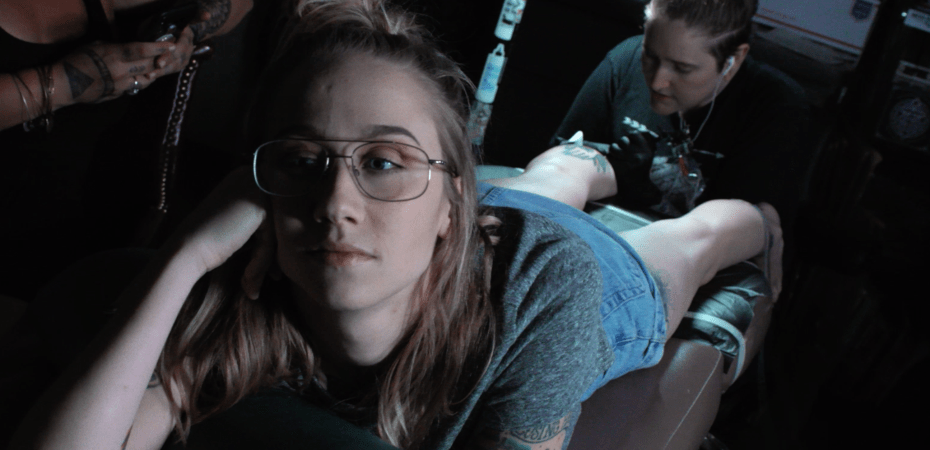
Directed by Chris Kasick, a true crime podcaster (Emily Nestor) from Appalachia blurs the line between fact and entertainment as she investigates a mysterious local death.
Society’s obsession with true crime, violence and conspiracies at this point is very well documented but what’s not often discussed is how vastly unhealthy that behaviour can be. Citizen Sleuth begins portraying Emily Nestor as a person out for the truth, to provide justice or closure to a tragic, horrifying death. The surprise here is that its entire perspective evolves into something much more complicated by the time that the credits roll.
It’s fascinating that the film spends so much time hyping up how its subject had no experience yet she built an audience, how she got people listening to, or invested in, Jaleayah Davis’ case. When ultimately it opens up a poignant debate about the grim ethics and exploitation of true crime podcasts.
Therein lies how the experience of this film becomes extremely frustrating, it’s battling through all of the humble bragging to get to the crux of this issue. It’s as if Chris Kasick didn’t quite have a handle on this subject, there’s this huge potential to explore why it can be exploitative, damaging and self-aggrandising but it’s never fulfilled. There’s a quality and tone to it that feels as though Kasick became friends with Nestor and lost that necessary objective eye, missing out on tackling the bigger issues at play.
You could dive into a whole host of ethical and moral questions: how these podcasts can negatively impact the lives of those involved, how they can mislead people, how they can turn into cash cows and become about shock and scandal rather than justice. The list truly goes on but Citizen Sleuth never more than dips its toes into any of them, it treats them peripherally rather than accepting they are a huge and vital part of this story.
Stylistically, it’s along the lines of a Netflix documentary, in the sense that when the topic itself is intriguing enough, you can do fairly little with the aesthetic and it will work regardless. There isn’t a great deal to pick apart, it’s quite simple and doesn’t particularly take any risks. It moves back and forth between rougher handheld, in the action content and structured talking head type shots. It plays things by the book.
Ultimately there’s one key question that determines the overall quality of Citizen Sleuth: is the filmmaker wholly aware of the point that he’s making? Because it’s genuinely hard to determine, whether he’s making a statement or if the underlying, more valuable, discussion to this story is in fact unintentional. The way that it progresses and that it’s leaving this giant ethical quandary to the last minute, would imply that he’s not intently trying to explore it, which becomes problematic.
Another signifier of that issue is that Emily Nestor takes part in Q&As for the film, which if you were viewing this as a massively derogatory perspective of your choices and the dangers of true crime podcasts, logically you would step away. Which then leads to the next question of whether Chris Kasick is purely providing yet another platform for Nestor? In spite of the glaringly negative light that the film shines on her. With the answer to both questions being unclear, it leaves the documentary in a murky limbo of ethics, morals and exploitation.
Verdict: ✯✯✯ | 6/10
Screened as part of Sheffield DocFest 2023
 FilmCarnage.com